Вульвовагинальные инфекции (ВВИ) остаются одной из наиболее частых причин обращения женщин репродуктивного возраста за гинекологической помощью. Наиболее распространенными формами являются бактериальный вагиноз, вульвовагинальный кандидоз и трихомониаз [1]. Бактериальный вагиноз является одной из самых распространенных причин патологических выделений и встречается у 5–15% европеоидных женщин по данным международных публикаций [2]. Вульвовагинальный кандидоз развивается у 75% женщин в течение жизни и является частой причиной хронического рекуррентного течения [2, 3].
Клиническую проблему представляют смешанные формы ВВИ, высокая частота рецидивов и полимикробный характер инфекции, включая сочетание аэробной и анаэробной микрофлоры [3–6], что обосновывает применение комбинированных препаратов с широким спектром действия.
Необходимо отметить частое бессимптомное носительство дрожжеподобных грибов, что, по сути своей, является нормой и не требует лечения [7, 8]. В то же время при применении различных антимикробных средств при лечении бактериального вагиноза или других вариантов вагинита дрожжеподобные грибы могут активироваться и вызывать рецидив заболевания [9], что еще раз подчеркивает необходимость включения в схемы лечения антимикотических препаратов.
Применение антимикробных препаратов в реальной клинической практике требует также возможности эмпирического подхода: лечение начинается после взятия биоматериала с целью оценки микробиоценоза и идентификации возбудителя заболевания с дальнейшей коррекцией специфического лечения после получения результатов исследования. При повторном эпизоде вагинита или при неэффективности эмпирической терапии клинические рекомендации указывают на необходимость проведения микробиологического исследования и назначения специфической терапии, направленной на конкретного возбудителя [7]. Возможность применения такого подхода обусловливает требования к препаратам первого ряда при проведении эмпирической терапии: активность в отношении большинства возбудителей наиболее частых инфекций без значимого воздействия на вагинальные лактобациллы.
Вместе с тем имеет место проблема растущей резистентности микроорганизмов к антимикробным препаратам, что заставляет искать все более новые и совершенные схемы лечения ВВИ [7, 8].
Наконец, в клинической практике одной из ключевых проблем остается низкая приверженность пациенток к терапии. Средняя продолжительность курса большинства препаратов варьируется от 6 до 20 дней в зависимости от показаний [10–13]. Однако исследования приверженности к лечению демонстрируют, что многие женщины преждевременно прекращают терапию ВВИ сразу после исчезновения основных симптомов заболевания [14]. Это подчеркивает актуальность разработки лекарственных средств и схем лечения, которые обеспечили бы высокую эффективность при минимальной продолжительности курса.
Комбинированные локальные препараты на основе производных имидазола и нитроимидазола эффективны в отношении бактериальных, грибковых и протозойных инфекций [1, 5, 6]. В 2022 г. на российском рынке появился комбинированный препарат «Гайномакс Плюс», суппозитории вагинальные, содержащие тиоконазол, тинидазол и лидокаин. Гайномакс Плюс показал высокую эффективность при различных вариантах вагинальных инфекций с курсом лечения 3 дня [15].
Несмотря на накопленные данные о высокой эффективности комбинированной терапии, большинство исследований выполнено в условиях контролируемых протоколов или ретроспективного анализа, что ограничивает их экстраполяцию на повседневную клиническую практику. Таким образом, остается недостаточно изученной эффективность и безопасность комбинированных локальных препаратов в условиях реальной клинической практики на пациентках в российской популяции, особенно при различных клинических вариантах ВВИ, включая смешанные и рецидивирующие формы, что и стало предметом исследования «Ангара». Кроме того, авторов интересовала распространенность различных возбудителей ВВИ в реальной практике и возможность применения антимикробных препаратов в качестве эмпирической терапии.
Наименование проекта «Ангара» было выбрано по названию реки, которая является единственным истоком, вытекающим из озера Байкал – природного символа чистоты, тем самым авторы исследования стремились подчеркнуть точность полученных данных. В связи с этим проведение многоцентрового проспективного неинтервенционного исследования (проект «Ангара») представляется обоснованным и актуальным.
Цель исследования: оценить распространенность различных ВВИ и клиническую эффективность и безопасность препарата, содержащего тиоконазол, тинидазол и лидокаин, в форме вагинальных суппозиториев (Гайномакс Плюс) у женщин с ВВИ в условиях рутинной клинической практики.
Материалы и методы
Дизайн исследования
Пострегистрационное многоцентровое проспективное исследование (проект «Ангара») проводилось в условиях рутинной клинической практики и носило неинтервенционный характер. Все пациентки получали препарат «Гайномакс Плюс» (лидокаин + тинидазол + тиоконазол, 100 мг + 300 мг + 200 мг) по схеме: 1 суппозиторий интравагинально на ночь в течение 3 дней. Включение пациенток осуществлялось на базе 11 исследовательских центров России (Москва, Санкт-Петербург, Казань, Ленинградская область, Новосибирск, Омск, Ростов-на-Дону, Уфа, Энгельс).
Популяция исследования
В исследование включались амбулаторные пациентки женского пола в репродуктивном возрасте (от 18 до 49 лет) с патологическими вагинальными выделениями и не менее чем одной жалобой на вагинальную дисфункцию (вагинальное жжение, вагинальный зуд, вагинальная боль, неприятный запах, диспареуния, боль при мочеиспускании) при наличии диагноза ВВИ.
Основными критериями невключения были беременность и лактация, рецидивирующие ВВИ, требующие системной терапии ВВИ, инфекции, передаваемые половым путем (хламидийная инфекция, гонорея, трихомониаз, инфекция, вызванная Mycoplasma genitalis), генитальный герпес, неинфекционные заболевания вульвы, иммунодефицитные состояния, системная противомикробная терапия в течение 2 недель до включения в исследование.
Визиты и процедуры
В исследовании было запланировано проведение трех последовательных визитов. Общая схема наблюдения позволяла оценить исходное клиническое и лабораторное состояние пациенток, ранний ответ на проводимую терапию, а также устойчивость достигнутого эффекта в более отдаленные сроки.
Визит 1 (1-й день) включал сбор анамнеза, гинекологический осмотр, регистрацию симптомов.
Осуществлялось взятие материала (мазок из влагалища, цервикального канала и уретры) для микроскопического исследования, исследования Фемофлор-16 и исследования pH. Помимо этого проводилась лабораторная диагностика инфекций, передаваемых половым путем (полимеразная цепная реакция (ПЦР) в реальном времени на Neisseria gonorrhoeae, Chlamydia trachomatis), с целью исключения таких пациентов.
В ходе визита устанавливался предварительный диагноз по Международной классификации болезней (МКБ-10), после чего назначалась лекарственная терапия в эмпирическом режиме. Также фиксировали наличие/отсутствие сопутствующего цервицита по данным клинического обследования и микроскопического исследования отделяемого из цервикального канала и выдавали пациентке дневник для ежедневной регистрации симптомов и соблюдения режима терапии.
После проведения комплекса лабораторных исследований вагинального биоматериала (микроскопическое исследование, рН, Фемофлор-16) устанавливался уточненный диагноз ВВИ на основе критериев, представленных в клинических рекомендациях МЗ РФ «Воспалительные заболевания шейки матки, вульвы и влагалища» (2025) [7].
Визит 2 (10–14-й день) предусматривал оценку клинического ответа, динамики симптомов и приверженности лечению с повторным осмотром и лабораторной оценкой. С этой целью выполнялась оценка микроскопии и рН биоматериала из влагалища.
Визит 3 (28–30-й день) предусматривал итоговую оценку эффективности и безопасности терапии с определением клинического и микробиологического исходов с помощью лабораторной диагностики. Для этих целей выполнялся тот же комплекс обследований, что и на Визите 1: микроскопия, оценка рН, Фемофлор-16.
Эпидемиологические данные
Оценивалась доля пациенток с диагнозами ВВИ по МКБ-10, а также доля пациенток с различными вариантами ВВИ на основании уточненного диагноза. Также оценивалась встречаемость каждого из возбудителей ВВИ.
Оценка эффективности
Первичным критерием эффективности являлась частота клинического успеха лечения ВВИ после трехдневного курса терапии на Визите 2 (10–14-й день). Клинический успех определялся врачом как возврат к обычному гинекологическому состоянию пациентки, тогда как клиническую неудачу фиксировали при сохранении или усилении симптомов ВВИ либо необходимости назначения альтернативного лечения.
К вторичным критериям эффективности относили: частоту клинического успеха на Визите 3 (28–30-й день), время до исчезновения симптомов по данным дневников пациенток, уровень pH влагалищных выделений, эффективность терапии сопутствующего цервицита. Микробиологическая эффективность оценивалась по частоте эрадикации отдельных возбудителей по данным количественной ПЦР (Фемофлор-16) на Визите 3 (28–30-й день). Дополнительно оценивали удобство применения исследуемой терапии по шкале Гуттмана (7 утверждений, отражающих параметры удобства применения, простоты использования, длительности схемы терапии, комфорта, отсутствия подтекания, скорости наступления эффекта и облегчения симптомов).
Оценка безопасности
Безопасность оценивали у пациенток, получивших хотя бы одну дозу препарата. Учитывали частоту нежелательных явлений (НЯ), включая серьезные НЯ.
Статистический анализ
Анализ проводили в популяции для анализа эпидемиологических данных (все пациентки, которым были выполнены процедуры Визита 1 и которым был установлен уточненный диагноз ВВИ) и популяции эффективности (пациентки, которые получили хотя бы одну дозу исследуемого препарата). Расчет показателей выполнялся по доступным данным, поэтому число наблюдений могло варьироваться в зависимости от визита и оцениваемого параметра. Категориальные данные представлены в виде абсолютных значений и долей с 95% доверительным интервалом (ДИ), количественные – в виде среднего значения (М), стандартного отклонения (SD), медианы (Me) и межквартильного размаха [Q1; Q3].
Результаты
В исследовании приняли участие 150 пациенток, из них 10 выбыли на этапе скрининга: у 3 женщин была выявлена хламидийная инфекция, у 4 не был установлен окончательный диагноз ВВИ и у 3 пациенток качество биологического материала было неудовлетворительным, что сделало невозможным полную оценку соответствия критериям включения и невключения. Окончательно 140 пациенток были включены в исследование для анализа эпидемиологических данных. По крайней мере, одну дозу исследуемого препарата получили 138 пациенток, составивших популяцию для оценки эффективности препарата (рис. 1).
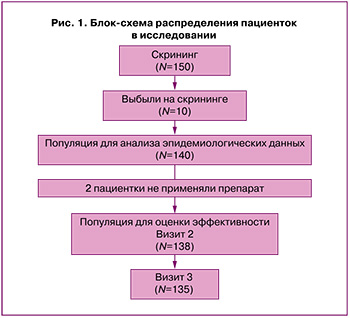
На Визите 3 (28–30-й день) были собраны данные о 135 пациентках, поскольку 3 пациентки были исключены из исследования вследствие утраты контакта.
Эпидемиологические данные
Средний возраст пациенток составил 34,51±8,31 года (медиана 35 лет), средний индекс массы тела – 24,06±4,55 кг/м2 (табл. 1). Подавляющее большинство пациенток относились к европеоидной расе (98,57%), значимо меньшее количество – к монголоидной (1,43%).
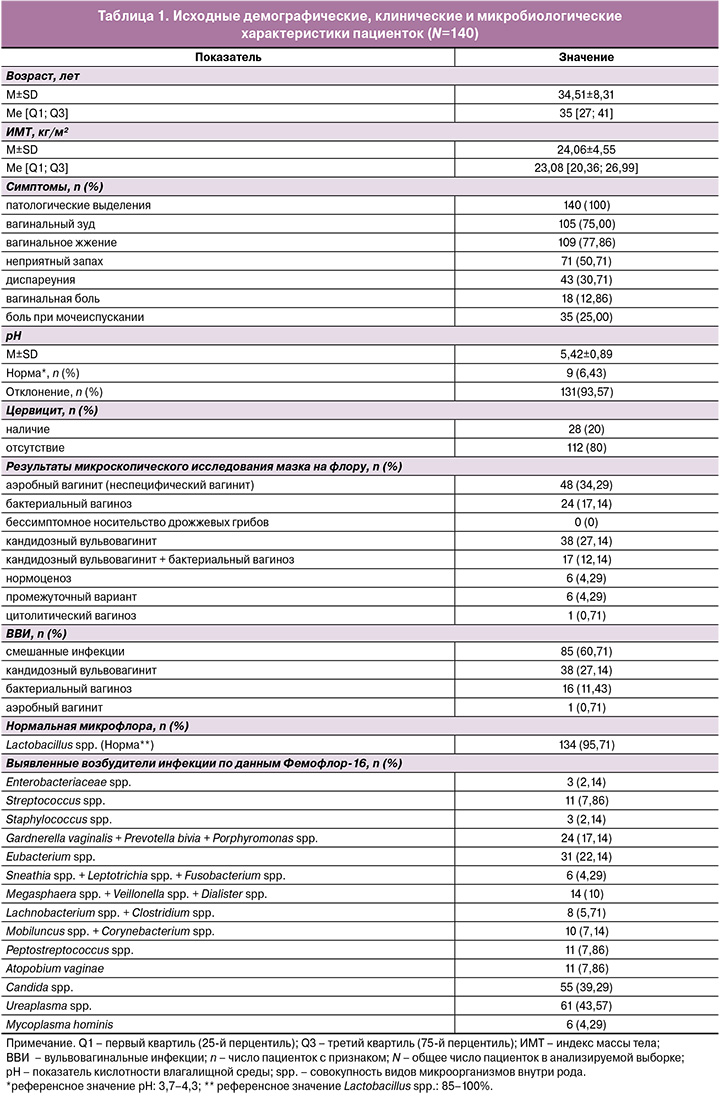
Наиболее частыми предварительными диагнозами у этих пациенток, согласно МКБ-10, были: «острый вагинит» – у 89/140 (63,57%), «подострый и хронический вагинит» – у 33/140 (23,57%) и «другие невоспалительные болезни влагалища» – у 10/140 (7,14%). Остальные 8 (5,71%) пациенток имели менее распространенные диагнозы (табл. 1).
В структуре уточненных диагнозов ВВИ преобладали смешанные формы – у 85 (60,71%) пациенток. Кандидозный вульвовагинит выявлен у 38/85 (27,14%), бактериальный вагиноз – у 16/85 (11,43%), аэробный (неспецифический) вагинит – у 1/85 (0,71%) (табл. 1).
Среди смешанных вагинальных инфекций наиболее часто встречались сочетания бактериального вагиноза и вульвовагинального кандидоза (10/85; 11,76%), а также сочетания вульвовагинального кандидоза с другими инфекциями, в том числе уреаплазмой (16/85; 18,82%). Реже наблюдались комбинации аэробного вагинита с бактериальным вагинозом (8/85; 9,41%), аэробного вагинита с вульвовагинальным кандидозом (3/85; 3,53%), сочетание аэробного вагинита, бактериального вагиноза и вульвовагинального кандидоза (2/85; 2,35%).
В структуре микст-инфекций также наблюдались бактериальный вагиноз в сочетании с другими инфекциями, в том числе с уреаплазмой, у 6/85 (7,06%) пациенток и аэробный вагинит с другими инфекциями – у 1/85 (1,18%) (табл. 1).
Отдельную значимую группу пациенток с жалобами на вагинит составили пациентки без выявленного специфического возбудителя по данным Фемофлор-16 (за исключением уреаплазмы), и у которых при микроскопическом исследовании определялась картина неспецифического вагинита; такие случаи также были отнесены к категории смешанных инфекций («другие смешанные инфекции») (39/85; 45,88%).
При этом уточненный диагноз ВВИ после проведения комплекса лабораторной диагностики часто не совпадал с первоначальным. Например, почти у каждой 4-й пациентки (27,14%) после лабораторного исследования диагностирован кандидозный вульвовагинит, тогда как первоначальный диагноз в большинстве случаев для этих пациенток был «острый вагинит». По данным молекулярно-биологического исследования с использованием теста «Фемофлор-16», наиболее часто выявлялись Ureaplasma spp. (43,57%) и Candida spp. (39,29%). Частота выявления основных анаэробных микроорганизмов, ассоциированных с бактериальным вагинозом, составила 17,14% для Gardnerella vaginalis и 7,86% – для Atopobium vaginae. В целом у 36/140 (25,7%) женщин выявлялся повышенный титр хотя бы одного анаэробного возбудителя. Аэробная флора (факультативные анаэробы): Streptococcus spp., Staphylococcus spp., Enterobacteriaceae spp. выявлялись реже (2,14–7,86%), чем облигатные анаэробы (табл. 1). Вопреки классическим представлениям, в нашем исследовании почти у всех пациенток с ВВИ определялось нормальное содержание Lactobacillus spp. (134/140; 95,71%).
Клиническая симптоматика на момент включения в исследование была выраженной: патологические выделения отмечались у всех пациенток (100%), зуд – у 75,00%, жжение – у 77,86% и неприятный запах вагинальных выделений – у 50,71% (табл. 1). Цервицит был диагностирован по данным микроскопического исследования после взятия мазка из цервикального канала на Визите 1 у 28 пациенток (20%). Средний уровень pH влагалищных выделений составил 5,42±0,89; отклонение от нормальных значений зарегистрировано у большинства пациенток (93,57%) (табл. 1).
Клиническая эффективность
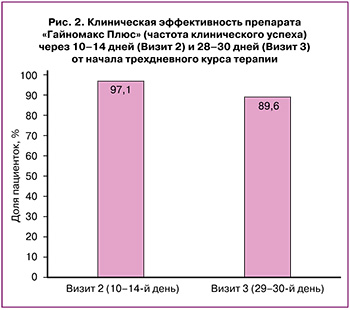
Клинический успех трехдневного курса терапии зафиксирован у 97,1% пациенток (134/138; 95% ДИ: 92,7–99,2) через 10–14 дней от начала терапии. Положительный эффект от проведенной терапии сохранялся на уровне 89,6% (121/135; 95% ДИ: 83,2–94,2) через 28–30 дней от начала терапии (Визит 3) (рис. 2). По данным дневников наблюдения, все пациентки продемонстрировали полную приверженность терапии.
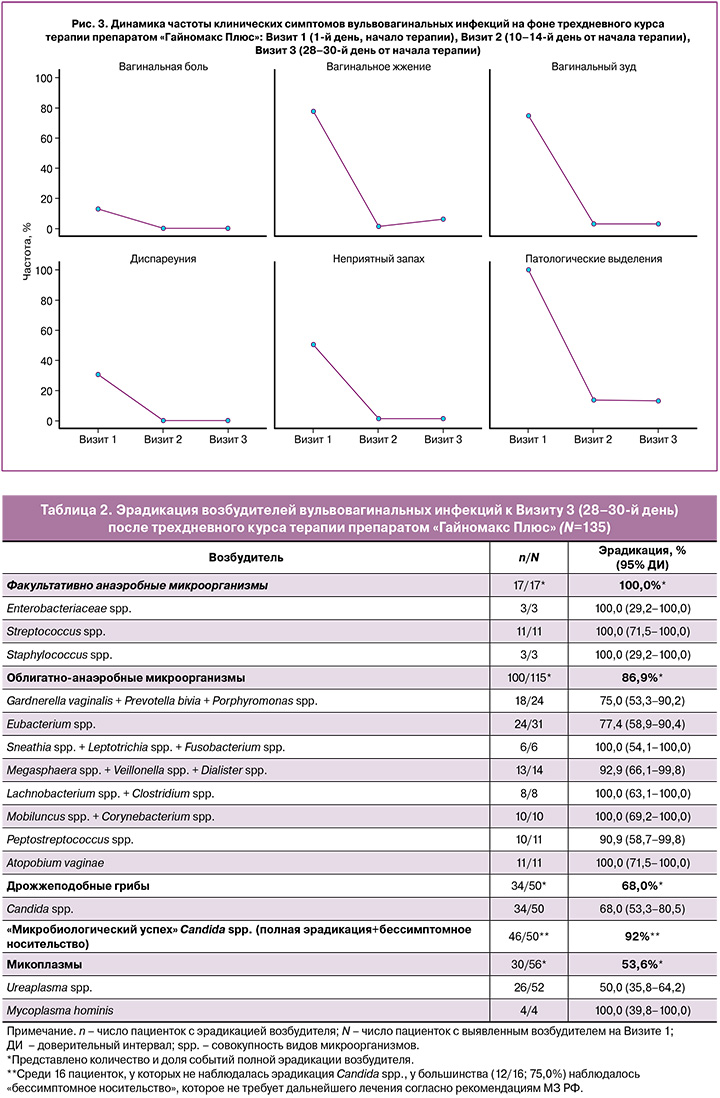
Среднее время до исчезновения патологических выделений из половых путей составило 2,77±0,45 дня, чувства жжения – 2,43±0,58 дня, зуда в области влагалища – 2,49±0,57 дня, боли во влагалище – 2,43±0,51 дня, неприятного запаха – 2,31±0,65 дня. Наиболее быстро регрессировала диспареуния – в среднем через 1,74±0,50 дня.
К Визиту 2 (10–14-й день) отсутствие патологических выделений отмечено у 86,2% (119/138) пациенток, зуда – у 96,2% (100/104), жжения – у 98,1% (106/108) и неприятного запаха – у 97,1% (67/69). Боль во влагалище (100%; 17/17) и диспареуния (100%; 43/43) к Визиту 2 (10–14-й день) купировались у всех пациенток. К Визиту 3 (28–30-й день) достигнутые клинические эффекты сохранялись (рис. 3). Количество пациенток на Визите 2 отличается от Визита 1 в связи с выбыванием 3 пациенток; данные по их симптомам отсутствуют.
Микробиологическая эффективность
Ключевым результатом исследования явились данные по эрадикации отдельных возбудителей, выявленных на исходном визите. В анализ эрадикации были включены только пациентки, для которых были получены результаты исследования Фемофлор-16 на Визите 3.
Полная эрадикация (100%) была достигнута для аэробных (факультативно анаэробных) микроорганизмов (Streptococcus spp., Staphylococcus spp., Enterobacteriaceae spp.) и некоторых анаэробов (Sneathia spp. + Leptotrichia spp. + Fusobacterium spp., Lachnobacterium spp. + Clostridium spp., Mobiluncus spp. + Corynebacterium spp., Atopobium vaginae) (табл. 2). Высокие показатели эрадикации отмечены также в отношении анаэробных ассоциаций, таких как Megasphaera spp. + Veillonella spp. + Dialister spp. – 92,9%, Peptostreptococcus spp. – 90,9%, Eubacterium spp. – 77,4%, Gardnerella vaginalis + Prevotella bivia + Porphyromonas spp. – 75,0%. Полная эрадикация Candida spp. достигнута в 68,0% случаев (34/50). Среди 16 пациенток, у которых не наблюдалась эрадикация Candida spp., у большинства (12/16; 75,0%) отсутствовали клинические симптомы к Визиту 3, и они были расценены как «бессимптомное носительство», которое не требует дальнейшего лечения. Таким образом, «микробиологический успех» лечения Candida нами был оценен как 92% (46/50).
Также зарегистрирована эрадикация Mycoplasma hominis (100%; 4/4) и Ureaplasma urealyticum/parvum (50,0%; 26/52). На фоне применения препарата не отмечено угнетающего воздействия на нормальную вагинальную микрофлору; доля пациенток с нормальным содержанием Lactobacillus spp. оставалась высокой и увеличилась до 97,8% (132/135) на Визите 3. У всех трех пациенток со сниженным содержанием Lactobacillus spp. на Визите 3 симптомы ВВИ отсутствовали.
Эффективность терапии сопутствующего цервицита и нормализация pH
Среди пациенток с признаками сопутствующего цервицита на исходном визите к Визиту 3 (28–30-й день) клиническое разрешение цервицита зарегистрировано у 92,9% (26/28). На фоне трехдневного курса терапии отмечалось снижение pH влагалищных выделений с приближением к референсным значениям: средний pH снизился с 5,42±0,89 до 4,37±0,60 на 10–14-й день и сохранялся на сходном уровне на 28–30-й день (4,40±0,58).
Удобство применения
Все пациентки заполнили шкалу Гуттмана. Удовлетворенность лечением была высокой: средний суммарный балл составил 6,44±1,09 (95% ДИ: 6,26–6,63) из 7 максимально возможных, что свидетельствует о стабильной и положительной оценке удобства применения препарата большинством пациенток. Практически все пациентки (99%; 137/138) отметили удобство и легкость применения, а также преимущества короткой трехдневной схемы терапии. Более 93% (129/138) указали на быстрое наступление эффекта, при этом 85% (117/138) сообщили об облегчении симптомов уже в первый день лечения. Комфорт применения препарата отметили 87% пациенток (120/138), 81% (112/138) указали на отсутствие вытекания препарата.
Безопасность
Безопасность препарата оценена у всех 138 пациенток, получивших хотя бы одну дозу препарата. НЯ зарегистрированы у 6 пациенток (4,3%), носили единичный характер, были легкой степени тяжести, несерьезными. Серьезные НЯ, в том числе госпитализации и летальные исходы, не зарегистрированы. Среди зафиксированных НЯ отмечены головная боль, аллергическая реакция на пищу (дерматит), диарея и гастроэнтерит предположительно инфекционного происхождения, идиопатическая периферическая вегетативная невропатия, цервикалгия и эзофагит. Во всех случаях связь с приемом исследуемого препарата оценивалась как отсутствующая.
Обсуждение
Настоящее многоцентровое проспективное наблюдательное исследование продемонстрировало высокую клиническую эффективность трехдневной терапии препаратом «Гайномакс Плюс» у женщин репродуктивного возраста с ВВИ различного генеза в условиях эмпирического применения. Особенностью исследования является использование молекулярно-биологической диагностики для верификации возбудителей и оценки их эрадикации.
При изучении данных о распространенности различных ВВИ обращает на себя внимание высокая частота острых воспалительных форм и смешанных инфекций. Преобладающей формой инфекций в нашем исследовании оказались смешанные ВВИ (85/140, 60,71%), которые были чаще всего представлены микробными ассоциациями дрожжеподобных грибов рода Candida, уреаплазм и анаэробных микроорганизмов. Распространенность бактериального вагиноза оказалась небольшой и составила 11,43% (16/140). При этом анаэробная микрофлора встречалась достаточно часто (25,7%, 36/140) в сочетании с другими группами возбудителей.
Таким образом, с учетом структуры возбудителей ВВИ, а также частого несовпадения первичного и уточненного диагнозов, логичным является использование в качестве эмпирической терапии именно комбинированных препаратов, активных в отношении большинства возбудителей ВВИ, и в первую очередь – дрожжеподобных грибов и анаэробных микроорганизмов.
Применение препарата «Гайномакс Плюс», зарегистрированного на рынке ЕАЭС 3 года назад, обеспечивает высокую клиническую и микробиологическую эффективность при коротком, трехдневном курсе лечения. Исследования эффективности этого комбинированного препарата демонстрируют быстрое купирование основных симптомов (зуда, жжения, патологических выделений из половых путей), снижение концентрации условно-патогенной микрофлоры и элиминацию грибов рода Candida, а также восстановление нормального микробиоценоза влагалища с увеличением доли Lactobacillus spp. [16–18].
При смешанных формах вагинита короткие курсы комбинированной терапии демонстрируют клиническую эффективность на уровне 90–95% и выраженное антимикробное действие, включая нормализацию pH влагалищных выделений и восстановление нормальной вагинальной микрофлоры [17, 18]. Высокая эффективность препарата обусловлена синергичным действием компонентов: тинидазол активен в отношении анаэробных бактерий и простейших, тогда как азоловый антимикотик тиоконазол обладает выраженной противогрибковой активностью, включая воздействие на устойчивые штаммы Candida, а также эффективен при инфекции, вызванной аэробными и факультативно-анаэробными бактериями.
В нашем исследовании данные по эффективности препарата «Гайномакс Плюс» согласуются с данными, полученными в предыдущих исследованиях [16–19]. При этом важным преимуществом Гайномакс Плюс является отсутствие значимого негативного влияния на нормальную микрофлору влагалища [20].
Так, клинический успех после трехдневного курса лечения был зафиксирован у большинства пациенток (97,1%) уже к 10–14-му дню от начала терапии и сохранялся на высоком уровне к 28–30-му дню (у 89,6%), что свидетельствует об устойчивости терапевтического эффекта. Быстрое улучшение состояния (начиная с первого дня) и купирование симптомов (в среднем в течение 2–3 дней), включая полное исчезновение вагинальной боли и диспареунии, имеет важное клиническое значение и может способствовать повышению приверженности лечению.
В настоящем исследовании отмечен хороший антибактериальный эффект с полной или близкой к полной эрадикацией большинства микроорганизмов: аэробных/факультативно-анаэробных, включая Streptococcus spp., Staphylococcus spp., Enterobacteriaceae spp., а также анаэробных возбудителей, таких как Atopobium vaginae, Gardnerella vaginalis, Mobiluncus spp., Clostridium spp., Sneathia spp. и Fusobacterium spp. Сходные результаты по высокой чувствительности анаэробных микроорганизмов продемонстрированы в других исследованиях комбинированного препарата тиоконазола и тинидазола [17–19]. Важным результатом исследования стала полная эрадикация Atopobium vaginae, в отношении которого ранее было мало данных [16].
В отношении ключевых возбудителей бактериального вагиноза (Gardnerella vaginalis + Prevotella bivia + Porphyromonas spp.) уровень эрадикации, представленный в настоящем исследовании (75,0%), сопоставим с ранее опубликованными данными [17].
Эрадикация Candida spp. (68,0%) была несколько ниже по сравнению с другими возбудителями [16–18]. В то же время у большинства пациенток, у которых после лечения сохранились в составе вагинального биотопа дрожжеподобные грибы с не-
эрадицированным возбудителем Candida spp., отсутствовали клинические симптомы кандидозного вульвовагинита (12/16; 75,0%). Таким образом, учитывая пациенток с бессимптомным носительством дрожжеподобных грибов, общий «микробиологический успех» лечения Candida spp. в нашем исследовании составил 92% [7].
Настоящее исследование впервые демонстрирует эрадикацию разных видов возбудителей ВВИ под действием препарата «Гайномакс Плюс» при проспективном сборе информации, отражающем полную и максимально приближенную к условиям рутинной клинической практики ситуацию. В рамках нашего исследования была оценена эффективность препарата при его использовании в эмпирическом режиме: решение о назначении препарата принималось на основе установления диагноза по клиническим и анамнестическим данным до получения данных лабораторного исследования. Такой подход позволяет снизить время ожидания результатов обследования и начать эффективную терапию.
Помимо клинической и микробиологической эффективности терапии ВВИ, в настоящем исследовании показано снижение pH вагинальных выделений и высокая эффективность терапии сопутствующего цервицита (92,9%), что указывает на комплексное действие препарата.
По завершении лечения через 30 дней у 97,8% женщин наблюдалось нормальное содержание лактобацилл, что в целом отражает благоприятный профиль безопасности в отношении вагинального микробиоценоза. Сходные данные о восстановлении вагинального микробиоценоза и нормализации pH представлены и в других исследованиях препарата «Гайномакс Плюс» [17–19].
Высокая удовлетворенность женщин лечением и их 100% комплаентность, по нашему мнению, обусловлены коротким курсом терапии и удобством применения препарата [14, 17]. Особый интерес представляет скорость наступления клинического эффекта: 85% женщин сообщили об уменьшении симптомов после первой дозы препарата.
Высокие показатели удовлетворенности и комплаентности также объясняются благоприятным профилем безопасности препарата: НЯ в исследовании отмечались редко (4,3%), носили легкий характер, не были связаны с терапией и не требовали ее отмены.
Ограничения. К ограничениям исследования относятся неинтервенционный дизайн, отсутствие контрольной группы и ограниченное число наблюдений. Вместе с тем данные особенности отражают условия реальной клинической практики и обеспечивают высокую практическую значимость результатов, показывая врачам наиболее вероятную картину течения и терапии ВВИ у пациенток. Использование объективных методов оценки, включая микроскопию, pH-метрию и молекулярно-биологическую диагностику (Фемофлор-16), а также динамическое наблюдение, позволяют считать полученные результаты достоверными и клинически значимыми [7].
Заключение
В условиях рутинной клинической практики применение трехдневной терапии препаратом «Гайномакс Плюс» продемонстрировало высокую клиническую эффективность, быстрое купирование симптомов ВВИ и устойчивость достигнутого терапевтического эффекта. Терапия сопровождалась эрадикацией широкого спектра возбудителей, включая аэробную, анаэробную и грибковую микрофлору, а также снижением pH влагалищной среды и восстановлением вагинальных лактобактерий.
Отмечена высокая эффективность лечения сопутствующего цервицита, сохранение эффекта в более отдаленные сроки и высокая приверженность пациенток терапии, связанная с отмеченными удобством применения и короткой длительностью курса лечения. Препарат характеризовался благоприятным профилем безопасности: НЯ носили редкий, легкий характер и не были связаны с терапией.
Полученные результаты подтверждают обоснованность включения трехдневной терапии препаратом «Гайномакс Плюс» в эмпирическом режиме в качестве эффективного варианта терапии ВВИ, включая смешанные формы, в клинические рекомендации.