
Prevalence of human papillomavirus in women with different HIV status in Saint Petersburg
Shamaeva N.S., Samarina A.V., Martirosyan M.M., Domonova E.A., Popova A.A., Filatova M.P., Skrybneva T.S., Mozaleva O.L., Prilepskaya D.R., Vinogradova T.N.
Relevance: Cervical cancer (CC) is one of the leading causes of death due to malignant neoplasms in women. The main cause of CC is human papillomavirus (HPV) infection. In contrast to the general population, HIV-infected women are more likely to develop HPV-associated cervical diseases, including cancer. It is known that the prevalence of HPV varies in regions and can change over time.
Objective: To explore the prevalence of HPV in women with different HIV status, who are the residents of St. Petersburg.
Materials and methods: The study included 100 HIV-infected women, who undergo regular medical check-ups at St. Petersburg Centre for Prevention and Control of AIDS and Infectious Diseases, and 100 women without HIV, the residents of Saint Petersburg. Detection of vaginal and cervical HPV DNA of twenty-one HPV types (HPV 6, 11, 16, 18, 26, 31, 33, 35, 39, 44, 45, 51, 52, 53, 56, 58, 59, 66, 68, 82, 73), HIV RNA quantification in plasma, CD4+ lymphocyte counts were performed using PCR. The clinical and epidemiological characteristics were analyzed.
Results: Comparison of the incidence rates of vaginal and cervical HPV in the study groups showed 55% in HIV-infected women in the main group, and 32% in HIV- negative women in the comparison group (p<0,001). Vaginal HPV DNA in HIV-infected patients was detected in 43% of cases, and in 26% of HIV-negative women (p=0.01). Cervical HPV DNA was detected in 32% and 21% of women, respectively (p=0.08). In vaginal swabs from HIV-positive women, HPV 16 was detected most often (14%), and HPV 44 was detected in one of ten patients. In contrast, HPV 44 was detected more often, and HPV 16 and 66 were detected less often in 5% of cases (each type) in the comparison group. In HIV-positive women, HPV 16 (p=0,03), HPV 18 (p=0.04), HPV 39 (p=0.04), HPV 53 (p<0.01), and HPV 68 (p=0.03) were detected more often. In cervical smears from HIV-positive women, HPV 16 was detected in 11% of cases, HPV 44 and HPV 56 were detected in 9 % (each type). In cervical smears from women in the comparison group, HPV 16 was detected most frequently (4% of cases). Cervical HPV 56 was found most often in the main group (p=0.03). In 19% of HIV-infected women, several types of vaginal and cervical HPV infection were detected, in the comparison group, vaginal HPV infection was in 10%, and cervical HPV infection was in 8% of women.
Conclusion: In HIV-infected women, the prevalence of HPV in urogenital tract was higher than in the population. HPV types 16, 44, 56 and 66 were found most often. Seveval types of HPV infection were detected in many patients, that indicates importance of screening tests to detect a broader range of HPV types (not less than 21 types) in women with HIV infection.
Authors' contributions: Samarina A.V., Shamaeva N.S., Domonova E.A., Popova A.A., Prilepskaya D.R. – the concept and design of the study; Shamaeva N.S., Martirosyan M.M., Filatova M.P., Scrybneva T.S., Mozaleva O.L. – material collection and processing; Shamaeva N.S. – statistical data collection; Shamaeva N.S., Samarina A.V. – manuscript writing; Samarina A.V., Domonova E.A., Popova A.A., Martirosyan M.M., Vinogradova T.N. – manuscript editing.
Conflicts of interest: The authors confirm that they have no conflicts of interest to declare.
Funding: The study was conducted without any sponsorship.
Ethical Approval: The study was approved by the local Ethics Committee of the Central Research Institute of Epidemiology of Federal Service for Surveillance in Healthcare (Roszdravnadzor).
Patient Consent for Publication: The patients have signed informed consent for publication of their data.
Authors' Data Sharing Statement: The data supporting the findings of this study are available on request from the corresponding author after approval from the principal investigator.
For citation: Shamaeva N.S., Samarina A.V., Martirosyan M.M., Domonova E.A., Popova A.A., Filatova M.P., Skrybneva T.S., Mozaleva O.L., Prilepskaya D.R., Vinogradova T.N. Prevalence of human papillomavirus in
women with different HIV status in Saint Petersburg.
Akusherstvo i Ginekologiya/Obstetrics and Gynecology. 2026; (2): 92-102 (in Russian)
https://dx.doi.org/10.18565/aig.2025.227
Keywords
human papillomavirus (HPV)
cervical cancer
HIV infection
prevalence
One of the leading causes of death in the world is cervical cancer (CC) [1]. According to the WHO, in 2022 more than 600.000 new cases of CC and about 350.000 deaths from cervical cancer were estimated worldwide [2]. More than 6,000 women in the Russian Federation died from CC in 2022 [2, 3]. It was found the cervical cancer and development of precancerous condition – cervical intraepithelial neoplasia (CIN) is caused by human papillomavirus (HPV). According to IARC monographs (2009–2012) evaluating carcinogenic hazards to humans, the epidemiologic classification of HPV is the following: cancerogenic to humans – HPV types 16, 18, 31, 33, 35, 39, 45, 51, 52, 56, 58, 59; probably carcinogenic to humans – 68; possibly carcinogenic to humans – 26, 30, 34, 53, 66, 67, 69, 70, 73, 82, 85, 97; not classifiable as to its carcinogenicity to humans – 6, 11, 44 and other. The most common HPV types causing cervical cancer are HPV 16, 18, 33, 35, 52, 53 [4]. The frequency of cervical intraepithelial lesions varies in populations. Mild and moderate lesions account for 1.5–7.7% of cases, and high-grade lesions – 0.4–1.5% [5, 6].
According to research, HIV-infected women have a six-fold increased incidence risk of cervical cancer compared to those who are HIV-negative of the same age. Moreover, they are more likely to develop CC at a younger age. Mortality rates for cervical cancer are also twice as high as that among women without HIV, and this trend shows no a decline [7, 8]. It should be emphasized that there is a significantly higher prevalence of HPV among HIV-infected women compared with the general population (p<0.001), and reaches about 50%. At the same time, the prevalence of oncogenic (high- risk HPV types exceeds 30% according to the presented data [9–11]. High HPV prevalence in this group of women is associated with decline in immune system function and, as a consequence, low likelihood of virus elimination, increased risk of HPV persistence and cervical cancer development [12, 13]. Moreover, the risks of developing HPV-associated diseases of the cervix are directly dependent on the severity of immunodeficiency [9, 14, 15]. The study aimed to analyze the prevalence of papillomavirus infection among HIV-infected women found that any degree of immunodeficiency, including moderate, is associated with a high prevalence of HPV. In particular, with CD4+ lymphocyte count <500 cells/μL, papillomavirus infection frequency was 63%, while with CD4+ lymphocyte count of ≥500 cells/μl, it decreased to 36% (p=0.0012) [16]. HIV viral load in the blood also influences the incidence of cervical diseases. Plasma HIV viral load of >200 Copies/mL is a statistically significant risk factor for the development of moderate and high-grade cervical dysplasia [14, 17].
The pattern of HPV types in women varies depending on their HIV status. Previous studies, which explored the prevalence of 12 high-risk HPV types (16, 18, 31, 33, 35, 39, 45, 51, 52, 56, 58, 59) showed that in women living with HIV, HPV 16 (13.5–57.2%), 18 (15–19.7%), 52 (9.5–44%), 35 (9.3–22%), 31 (13.5–42.1%), 56 (31.57%), 58 (14.7–22%) were found most often. Furthermore, HPV 31, 33 and 35 were found more often in HIV-positive women compared with HIV-negative women (p<0,05) [18–20]. Co-infection with several types of HPV is also common among HIV-positive women. Research shows that over 80% of women living with HIV are simultaneously infected with four or more types of HPV having carcinogenic potential for humans [21–23]. In women without HIV, the incidence rate of simultaneous infection with different HPV types is 10–20% [24, 25].
Most studies on HPV-associated cervical diseases in HIV-infected women were carried out in the countries of Africa and America, where HPV types 16, 35, and 52 are most common, while in Russia HIV 16, 39, and 52 prevailed [19, 21, 24]. There are few large-scale comparative studies related to exploration of the prevalence of different high-risk HPV types in European countries, including the Russian Federation. There is also a lack of research explaining the differences in HPV types between women with different HIV status.
Recently published studies on cervical diseases in women with HIV were mostly conducted 5–10 years ago and even earlier, when antiretroviral therapy (ART) coverage was only 30–40% in Russia [26]. In 2012, a study on the prevalence of HPV among HIV-positive patients was conducted in Saint Petersburg. It was found that high-risk HPV types were detected in 79.4% of participants, and only one third of them (34.1%) received ART [27]. Currently, more than 80% of women living with HIV have an access to treatment of this infection, that influenced the immune status and the HIV viral load, and significantly changed patient profile in this group [28].
Thus, exploration of the prevalence of high-risk HPV in HIV-positive women, depending on the region of residence, CD4+ lymphocyte count, HIV RNA level in the blood, duration of receiving ART, as well as other clinical and epidemiological indicators, is a relevant issue.
The objective of the study was to explore the prevalence of HPV in women with different HIV status, who are the residents of Saint Petersburg.
Materials and methods
In 2023–2024 St. Petersburg Centre for Prevention and Control of AIDS and Infectious Diseases (the AIDSCenter) conducted the study within the framework of the project “Exploration of the influence of human papillomavirus on the development of oncological pathology in women living with HIV/AIDS in the participating countries” initiated by the Central Research Institute for Epidemiology of the Surveillance of Consumer Rights Protection and Human Wellbeing (Rospotrebnadzor). The study included 200 women. The main group comprised 100 women with confirmed HIV-positive status, who underwent regular medical check-ups at the AIDS Center. The comparison group included 100 women without HIV infection.
Inclusion criteria were patients assigned female at birth, confirmed diagnosis of HIV infection or confirmed absence of HIV-infection, written informed consent to participate in the study. Exclusion criteria were age below 18 years, previous history of pregnancy and surgical treatment of cervical disorders associated with HPV.
HIV-infected patients were examined and consulted by infectious disease specialists at the AIDS Center. The date of confirmed HIV diagnosis was the date of positive immunoblot test results. Laboratory tests included the following: quantitative detection of HPV DNA of twenty-one HPV types (6, 11, 16, 18, 26, 31, 33, 35, 39, 44, 45, 51, 52, 53, 56, 58, 59, 66, 68, 73, 82) in the samples of vaginal and cervical secretions by real-time polymerase chain reaction (PCR) with hybridization-fluorescence detection, using the methods and reagent kits developed by Rospotrebnadzor. Quantitification of HIV RNA in venous plasma samples (linearity of the reagent kit <40 copies/mL) and CD4+ lymphocytes in venous blood samples was performed using reagent kits registered in accordance with the established procedure in the territory of the Russian Federation. Laboratory tests were performed at the AIDS Center and Central Research Institute for Epidemiology of the Surveillance of Consumer Rights Protection and Human Wellbeing (Rospotrebnadzor).
Statistical analysis
Statistical analysis was performed using STATISTICA (v. 10) and EXCEL software packages. The following statistical analysis methods were used in the study: calculation of descriptive statistics for continuous quantitative indicators: arithmetic mean (M) and standard deviation (SD), and the minimum and maximum (min, max) data values.
Comparative analysis of the indicators in the groups formed in accordance with the objective of the study was carried out using statistical hypothesis tests. Quantitative indicator analysis (of 2 independent groups) was carried out using parametric Student's t-test when sampling distribution was likely to be normal, and the nonparametric Mann–Whitney test for non-normal distribution. Qualitative indicators were tested using Pearson’s chi-square (χ2) test, and Fisher's exact test, when the continuous data were unstable. To assess appropriateness of using χ2 test, the chi-square values from the tables of expected frequencies were calculated and analyzed. Two-tailed tests were used for multiple comparisons. Type 1 error (a-error) was set at standard threshold of significance р<0.05. The graphs showing the average trends in the formed groups, the variability of the studied indicators, their distribution, structure and interaction were built using the graphic editors of STATISTICA and Microsoft Office.
Results and discussion
Most study participants were of reproductive age (95%, n=190). The mean age of patients with HIV infection and women in the comparison group was comparable – 39.3 (7.7) years in the group of HIV-positive women, and 39.9 (9.8) years in the group of women without HIV.
The mean duration of HIV infection was 12.2 years in patients in the main group (minimum 3 months, maximum 25 years). The disease had been diagnosed less than 1 year ago in 6 women. However, acute HIV infection was detected only in two patients at the time of conducting the study. Disease duration was long in 57 (57%) patients in the main group – >10 years (13 women) and >15 years (44 women). According to the existing clinical recommendations, HIV infection with acquired immunodeficiency syndrome (CD4+ lymphocyte count <350 cells/μL at the time of linkage to dispensary HIV care) was detected in 22 women, and at the stage of severe immunodeficiency (CD4+-lymphocyte count <200 cells/μL) in 15 women [19]. At the time of conducting the study, 9 patients had severe and 9 patients had advanced immunodeficiency. In 17 patients (17%), CD4+ lymphocyte count was 350–500 cells/μL (moderate immunodeficiency).
The vast majority of women (95%) in the main group received ART at the time of enrollment in the study. The mean duration of HIV treatment of the study participants was 6.8 years (minimum 2 months, maximum 18 years). Undetectable HIV RNA viral load in plasema was observed in 84 patients. The reasons for detectable HIV viral load in 11 patients were duration of ART less than 6 months (n=6) and poor adherence to treatment (n=5). Given the mean disease duration over 12 years and the mean ART duration of 6.8 years, most women did not receive ART for 3.5 years or longer, that contributed to HIV infection progression, immunodeficiency, and persistent HPV infection, including high-risk HPV types. Thus, ART is a protective factor. According to the findings in our study, with increasing the duration of ART by 1 year, the probability of cervical HPV and vaginal HPV detection reduced by 1.14 times (p<0.01; OR=0.88, 95% CI: 0.80–0.96).
Our study found statistically significant association between the prevalence of HPV, CD4+ lymphocyte count and HIV RNA viral load. With CD4+ lymphocyte count of <500 cells/μL, risk of HPV detection increased by 4.46 times (p<0.001; OR=4.46, 95% CI 1.84–10.82), and with HIV RNA viral load >40 copies/mL – by 5.19 times (p<0.01; OR=5.19, 95% CI 1.63–16.50).
Therefore, compromised immune status and increased HIV viral load over the detection threshold increases the prevalence of HPV in women living with HIV.
Comparison of the total detection rate of vaginal and cervical HPV infection in the study groups found no statistically significantly difference between the women in the main and comparison groups – 55% and 32%, respectively (p<0.001). HPV DNA in vaginal smear samples was detected in 43/100 HIV-infected women (43%) and in 26/100 HIV-negative patients (26%) (p=0.01). HPV DNA in cervical smear samples was found in 32/100 (32%) and 21/100 (21%) women, respectively (p=0.08). The results of our study confirm previously obtained data showing that HPV infection was most often detected in the urogenital tract in HIV-infected women, compared with the population [9–11].
It is important to note that antiretroviral therapy coverage of patients in the main group was 3 times higher than in research, that was carried out at the AIDS Center in 2012 [27]. Moreover, during this time the number of women, who had severe and advanced immunodeficiency reduced by 2 times. Thus, in 2012 the percentage of patients with CD4+ lymphocyte count <349 cells/μL was 40.7%, and 18% in 2023. At the same time, the prevalence of HPV remained high – 72.5% in 2012 г. and 55% in 2023. It is most likely due to late diagnosis of HIV infection and delayed initiation of ART in a significant number of women often with progression of immunodeficiency. This determined low rate of HPV elimination compared with the population. Some previous studies have also shown no relationship between receiving ART and the frequency of high-risk cervical HPV detection. At the same time, significant association was found been the presence of HPV and low CD4+ lymphocyte count [29]. These data confirm the importance of early diagnosis of HIV infection and timely initiation of ART immediately after the diagnosis is made in terms of preventing cervical cancer and other HPV-associated diseases in women.
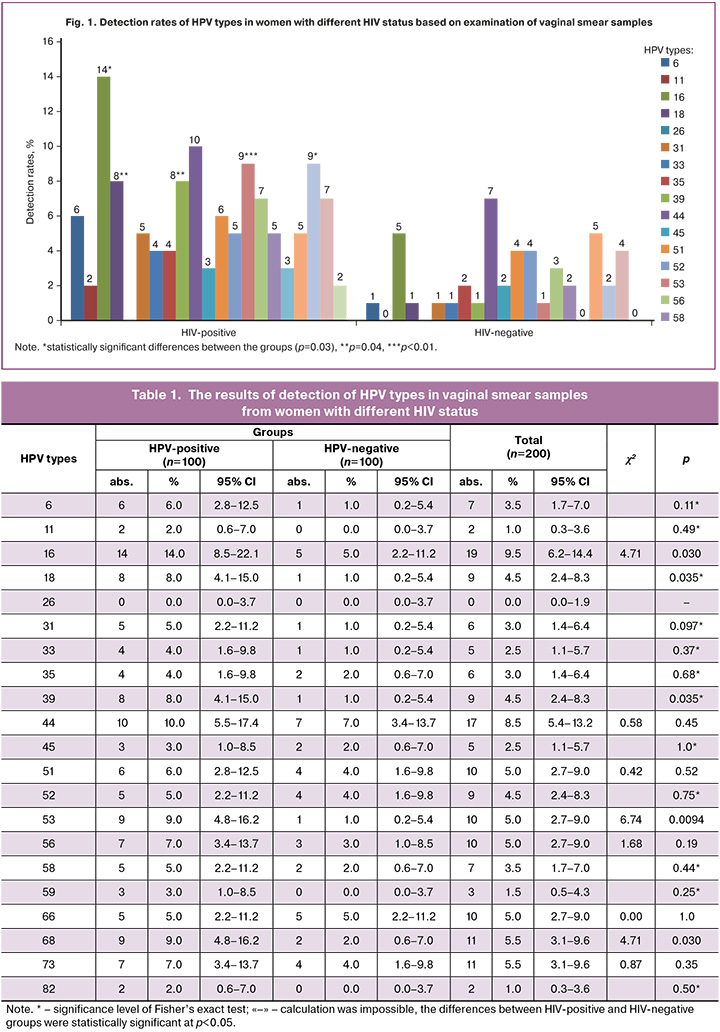
According to the data obtained in our study, HPV 16 was most often found in vaginal smear samples from women in the main group (14%), and HPV 44 was found in 1 in every 10 patients (10%). In contrast, HPV 44 was detected more often, and HPV 16 and 66 were detected less often (5% of each type) in the comparison group (Fig. 1, Table 1). Among the explored 21 HPV types, HPV 16 (p=0.03), HPV 18 (p=0.04), HPV 39 (p=0.04), HPV 53 (p<0.01), and HPV 68 (p=0.03) were detected more often in HIV-positive women.
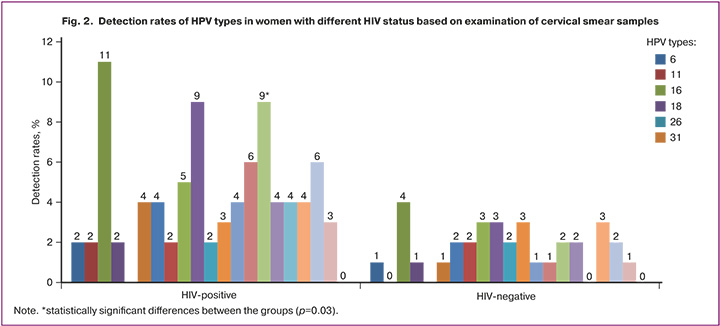
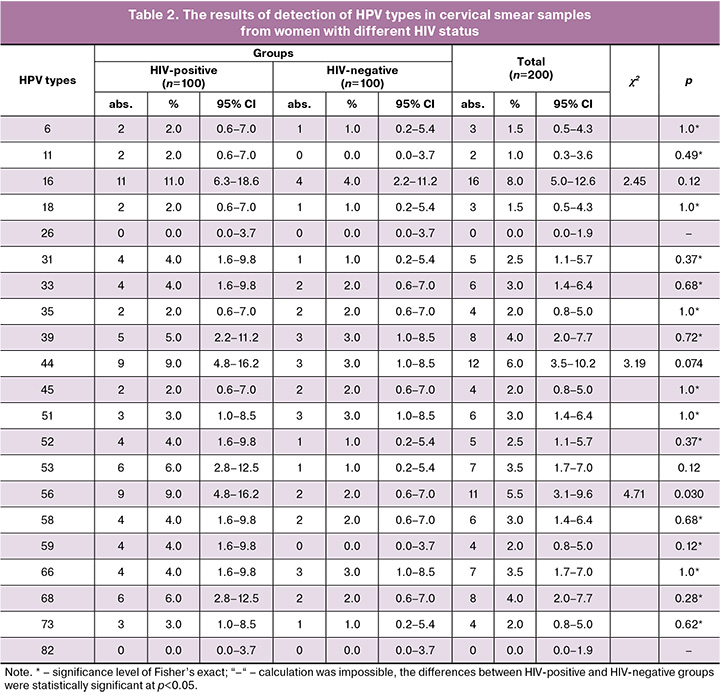
HPV 16 was found in cervical smear samples from 11/100 HIV-positive women (11% of cases). HPV types 44 and 56 ranked second, and both types were detected in 9/100 women (9% of cases). The frequency of detection of HPV 16 in cervical smear samples from women in the comparison group also ranked first – 4/100 (4% of cases) (Fig. 2, Table 2). HPV 56 was found most often in the main group (p=0.03).
According to research carried out in the countries in Africa and South America, the proportion of PHV types in women with different HIS status varied. So, Paraná V.C. et al. [18] showed that high-risk HPV types 16, 58 and 52 prevailed among HIV-positive women in the countries of Latin America, while the prevalence of HPV types 16, 18 and 52 was high in the group of HIV-negative women. High frequency of detection of HPV 16, 18 and 45 was in HIV-positive women in African countries [14].
The results of the studies on the prevalence of high risk HPV types found that HPV 16 and 68 were found most often in the countries of Eastern Europe and Central Asia: HPV 16 and 68 in Armenia, HPV 16, 18, 31 and 56 in Azerbaijan, HPV 16 and 56 in the Republic of Belarus, HPV 16 and 31 in the Republic of Kyrgystan, HPV 16, 31 and 56 in the Republic of Tajikistan [24].
According to the data in different studies, the pattern of registered HPV types in the Russian Federation differs depending on the region of residence. So, in Kemerovo region, HPV types 16, 39 and 52 were found most often in women living with HIV, and HPV 16, 33 and 52 in HIV-negative women [21]. HPV 52 and 16 were most often found in HIV-positive patients in Samara [24]. HPV 16 and 68 were found in women in Moscow and the Moscow region [30]. The above studies were devoted to exploration of the prevalence of high-risk HPV types and HPV testing of 12–14 types. The results of the study on the prevalence of high risk HPV types 16, 18, 31, 33, 35, 39, 45, 51, 52, 56, 58, 59, which was carried out in Saint Petersburg in 2012–2015, showed that HPV types 16, 31, 33, 52 и 56 were most often found in HIV-positive women.
Our study extended the spectrum of analysis of HPV prevalence to 21 types, including those with different variants of oncogenicity. It was found that in HIV-positive women, HPV 16 was most often detected in vaginal and cervical smears. Meanwhile, type 44, which is not classified as a high-risk type, prevailed in HIV-negative women. Furthermore, HPV types 18, 53, 68, and 39 were often detected in HIV-positive women, while types 16, 51, 52, and 66 were detected in the comparison group.
The differences in the pattern of identified oncogenic HPV types may be related to the use of different reagent kits in the studies, the spectrum of the explored HPV types, internal and external migration of the population, and rising rates of HIV-infected women receiving ART. It is important to take into consideration the changes in the pattern of HPV types in women with HIV infection when developing screening programs and HPV vaccines. This will contribute to effective prevention of human papillomavirus infection, cervical cancer, and other HPV-related diseases among HIV-infected patients in the European Region and the Russian Federation.
It is important to note that a substantial proportion of HIV-infected patients were found to be simultaneously infected with two or more types of HPV. The results of vaginal smear testing showed that two HPV types were detected in 16/100 women (16%), four or more HPV types in 11/100 (11%), that was more often than in the comparison group (p<0.01) (Fig. 3).
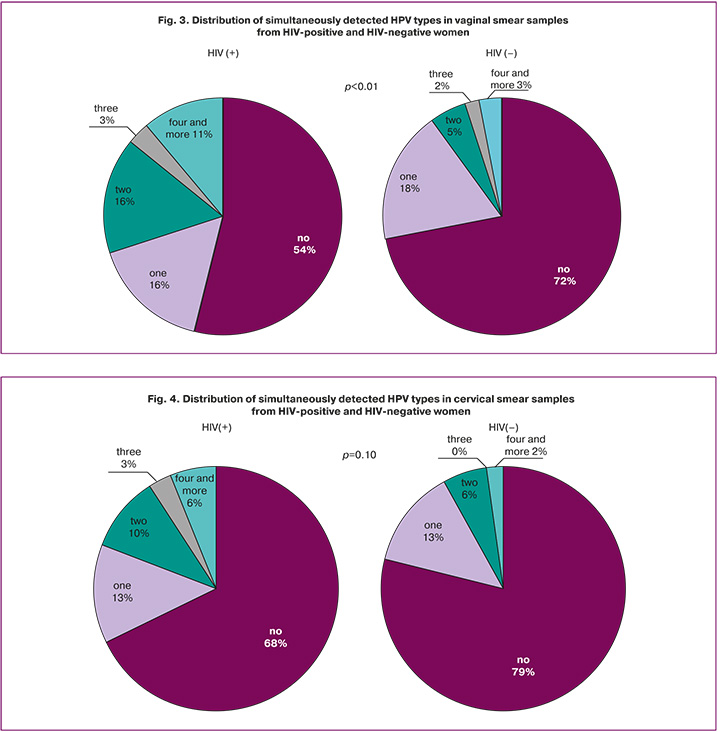
The results of cervical smear testing in the main study group showed that two HPV types were detected in 10/100 participants, while four or more HPV types were found in 6/100 (6%). The detection rate in this group was higher versus HIV-negative women in the comparison group (Fig. 4).
The overall frequency of multi-type HPV infection among women with HIV within two investigated loci (the vagina and the cervical canal) was 19%, while in HIV-negative patients it was lower – 10% and 8%, respectively. According to the data presented by Park E. et al. [25], multi-type HPV infection was observed in 1 in every 10 HIV-positive women, whereas this indicator was 0.6% among HIV-negative women.
In women with HIV infection, additional factors for frequent detection of multi-type HPV infection may include late initiation of ART and, consequently, the development of immunosuppressive conditions. These data prove the need to perform screening tests for detection of a wider range HPV types in women.
Conclusion
The results of our study showed significant prevalence of human papillomavirus among women, the residents of St. Petersburg, regardless of their HIV status. At the same time, the prevalence of HPV in urogenital tract in HIV-positive patients was significantly higher compared with women without HIV (p<0,001). Despite the fact the ART coverage among patients with HIV reached 95%, the prevalence of HPV remains significantly high compared with female population in general. High prevalence of HPV 16 (14% in the vagina and 11% in the cervical canal), as well as HPV 44, 18 and 56 were found in HIV-infected women. HPV 44 was found most often, and types 16 and 66 were found less often in the comparison group. In women with HIV infection, HPV types 16 (p=0.03), 18 (p=0.04), 39 (p=0.04), 53 (p<0.01), 68 (p=0.03) were found significantly more often in the vagina, and type 56 (p=0.03) in the cervical canal. High frequency of simultaneous infection with multi-type HPV was found in the group of HIV-positive women (p<0.01), that confirms the necessity to extend the spectrum of HPV types detection in this group of patients.
High frequency of detection of high-risk HPV types in HIV-infected women indicates the need to perform HPV screening tests in these women as often as possible compared with the population. In future it is extremely important to take into account the dynamic analysis of the prevalence of different types of HPV among women with HIV when developing HPV vaccines for this group of patients.
References
- Bruni L., Albero G., Serrano B., Mena M., Collado J.J., Gómez D. et al. ICO/IARC Information Centre on HPV and Cancer (HPV Information Centre). Human Papillomavirus and Related Diseases in Albania. Summary Report 10 March 2023. Available at: https://hpvcentre.net/statistics/reports/ALB.pdf
- World Health Organization. Cancer today. Absolute numbers, Mortality, Females, in 2022. Available at: https://gco.iarc.fr/today/en/dataviz/pie?mode=cancer&populations=900&group_populations=1&types=1&sort_by=value1&sexes=2
- Каприн А.Д., Старинский В.В., Шахзадова А.О., ред. Злокачественные новообразования в России в 2022 году (заболеваемость и смертность). М.: МНИОИ им. П.А. Герцена; 2023. [Kaprin A.D., Starinskiy V.V., Shahzadova A.O., eds. Malignant neoplasms in Russia in 2022 (morbidity and mortality). Moscow: P. Hertsen Moscow Oncology Research Institute; 2023 (in Russian)].
- Попова А.А., Степанова А.Г., Покровская А.В. Онкогинекологическая патология папилломавирусной этиологии у ВИЧ-инфицированных женщин. Эпидемиология и инфекционные болезни. Актуальные вопросы. 2015; 1: 53-5. [Popova A.A., Stepanova A.G., Pokrovskaya A.V. Papillomavirus-induced gynecological cancers in HIV-infected women. Epidemiology and infectious diseases. Current issues. 2015; 1: 53-5 (in Russian)].
- Benard V.B., Castle P.E., Jenison S.A., Hunt W.C., Kim J.J., Cuzick J. et al. Population–based incidence rates of cervical intraepithelial neoplasia in the human papillomavirus vaccine era. JAMA Oncol. 2017; 3(6): 833-7. https://dx.doi.org/10.1001/jamaoncol.2016.3609
- Shahida S.M., Lipi L.B., Rifat J.A., Kutubi A., Haq K., Afroz R. et al. Prevalence of cervical intraepithelial neoplasia in four Upazila of Dhaka Division. Mymensingh Med. J. 2019; 28(3): 655-61.
- Shiels M.S., Engels E.A. Evolving epidemiology of HIV-associated malignancies Curr. Opin. HIV AIDS. 2017; 12(1): 6-11. https://dx.doi.org/10.1097/COH.0000000000000327
- Stelzle D., Tanaka L.F., Lee K.K., Ibrahim Khalil A., Baussano I., Shah A.S.V. et al. Estimates of the global burden of cervical cancer associated with HIV. Lancet Glob. Health. 2021; 9(2): e161-9. https://dx.doi.org/10.1016/S2214-109X(20)30459-9
- Gupta R., Hussain S., Hariprasad R., Dhanasekaran K., Verma S., Agarwal V. et al. High prevalence of cervical high-grade lesions and high-risk human papillomavirus infections in women living with HIV: a case for prioritizing cervical screening in this vulnerable group. Acta Cytol. 2022; 66(6): 496-506. https://dx.doi.org/10.1159/000525340
- Mboumba Bouassa R.S., Gubavu C., Veyer D., Robin L., Gravier A., Hocqueloux L., Prazuck T. et al. High prevalence of cervical high-risk human papillomavirus harboring atypical genotypes in human immunodeficiency virus – infected and –uninfected first-generation adult immigrant women originating from Sub-Saharan Africa and living in France. J. Immigr. Minor. Health. 2021; 23(2): 308-19. https://dx.doi.org/10.1007/s10903-020-01074-7
- Boddu A., Bhatla N., Vashist S., Mathur S., Mahey R., Natarajan J. et al. Cervical cancer screening in HIV-positive women in India: Why, when and how? J. Obstet. Gynaecol. India. 2021; 71(3): 304-12. https://dx.doi.org/10.1007/s13224-020-01419-0
- AIDS info. Guidelines for prevention and treatment of opportunistic infections in HIV-infected adults and adolescents. 2018. Available at: https://www.idsociety.org/globalassets/idsa/practice-guidelines/guidelines-for-prevention-and-treatment-of-opportunistic-infections-in-hiv-infected-adults-and-adolescents.pdf
- Palefsky J.M. HPV-associated anal and cervical cancers in HIV-infected individuals: Incidence and prevention in the antiretroviral therapy era. Curr. Opin. HIV AIDS. 2017; 12(1): 26-30. https://dx.doi.org/10.1097/COH.0000000000000336
- Gilles C., Konopnicki D., Rozenberg S. The recent natural history of human papillomavirus cervical infection in women living with HIV: a scoping review of meta-analyses and systematic reviews and the construction of a hypothetical model. HIV Med. 2023; 24(8): 877-92. https://dx.doi.org/10.1111/hiv.13490
- Министерство здравоохранения Российской Федерации. Клинические рекомендации. ВИЧ-инфекция у взрослых. 2024. [Ministry of Health of the Russian Federation. Clinical guidelines. HIV infection in adults. 2024 (in Russian)].
- Sosso S.M., Tchouaket M.C.T., Fokam J., Simo R.K., Torimiro J., Tiga A. et al. Human immunodeficiency virus is a driven factor of human papilloma virus among women: evidence from a cross-sectional analysis in Yaoundé, Cameroon. Virol. J. 2020; 17(1): 69. https://dx.doi.org/10.1186/s12985-020-01340-y
- Gardella B., Agarossi A., Dominoni M., Pagano I., Del Frati S., Di Giminiani M. et al. Risk analysis stratification of CIN 2+ development in a cohort of women living with HIV with negative pap smear and HR-HPV test during a long-term follow-up. Vaccines (Basel). 2023; 11(2): 265. https://dx.doi.org/10.3390/vaccines11020265
- Paraná V.C., Souza Santos D., Barreto de Souza Silva D.I., Lima G.C., Gois L.L., Santos L.A. et al. Anal and cervical human papillomavirus genotypes in women co-infected with human immunodeficiency virus: a systematic review. Int. J. STD AIDS. 2022; 33(6): 530-43. https://dx.doi.org/10.1177/09564624221076293
- Chachage M., Parikh A.P., Mahenge A., Bahemana E., Mnkai J., Mbuya W. et al. High-risk human papillomavirus genotype distribution among women living with and at risk for HIV in Africa. AIDS. 2023; 37(4): 625-35. https://dx.doi.org/10.1097/QAD.0000000000003437
- Gilles C., Rozenberg S., Buxant F., Manigart Y., de Wind R., Houte K.V. et al. HPV genotyping in biopsies of HSIL and invasive cervical cancers in women living with HIV: a cohort – and a nested – case control study. Vaccine. 2022; 40(50): 7230-7. https://dx.doi.org/10.1016/j.vaccine.2022.10.029
- Марочко К.В., Артымук Н.В. Особенности папилломавирусной инфекции у женщин, инфицированных вирусом иммунодефицита человека. Фундаментальная и клиническая медицина. 2017; 2(3): 35-41. [Marochko K.V., Artymuk N.V. Features of papillomavirus infection in human immunodeficiency virus–infected women. Fundamental and Clinical Medicine. 2017; 2(3): 35-41 (in Russian)]. https://dx.doi.org/10.23946/2500-0764-2047-2-3-35-41
- Grover S., Seckar T., Gao L., Bhatia R., Lin X., Zetola N. et al. Characterization of HPV subtypes in invasive cervical cancer in Botswana patients using a pan–pathogen microarray technology. Tumour Virus Res. 2023. 15: 200262. https://dx.doi.org/10.1016/j.tvr.2023.200262
- Mcharo R., Lennemann T., France J., Torres L., Garí M., Mbuya W. et al. HPV type distribution in HIV positive and negative women with or without cervical dysplasia or cancer in East Africa. Front. Oncol. 2021; 11: 763717. https://dx.doi.org/10.3389/fonc.2021.763717
- Попова А.А., Шипулина О.Ю., Алмамедова Э.А., Рзаева А.М., Кадырова А.А., Григорян С.Р. и др. Вирус папилломы человека высокого канцерогенного риска у ВИЧ-инфицированных женщин в странах Восточной Европы и Центральной Азии. Клиническая дерматология и венерология. 2019; 18(1): 84-90. [Popova A.A., Shipulina O.Iu., Almamedova E.A., Rzaeva A.M., Kadyrova A.A., Grigoryan S.R. et al. Human papillomavirus of high carcinogenic risk in HIV-infected women in Eastern Europe and Central Asia. Russian Journal of Clinical Dermatology and Venereology. 2019; 18(1): 84-90 (in Russian)]. https://dx.doi.org/10.17116/klinderma20191801184
- Park E.K., Cho H., Lee S.H., Lee S.G., Lee S.Y., Kim K.H. et al. Human papillomavirus prevalence and genotype distribution among HIV-infected women in Korea. J. Korean Med. Sci. 2014; 29(1): 32-7. https://dx.doi.org/10.3346/jkms.2014.29.1.3
- Юрин О.Г., Ладная Н.Н., Кравченко А.В., Соколова Е.В., Суворова З.К., Нарсия Р.С., Покровский В.В. Антиретровирусная терапия в России. Эпидемиология и инфекционные болезни. Актуальные вопросы. 2021; 11(3): 46-52. [Yurin O.G., Ladnaya N.N., Kravchenko A.V., Sokolova E.V., Suvorova Z.K., Narsiya R.S., Pokrovsky V.V. Antiretroviral therapy in Russia. Epidemiology and infectious diseases. Current issues. 2021; 11(3): 46-52 (in Russian)]. https://dx.doi.org/10.18565/epidem.2021.11.3.46-52
- Мартиросян М.М., Ниаури Д.А., Степанова Е.В., Самарина А.В. Факторы риска развития дисплазии и рака шейки матки у ВИЧ-инфицированных женщин в Санкт-Петербурге. Журнал акушерства и женских болезней. 2012; 61(2): 33-7. [Martirosyan M.M., Niauri D.A., Stepanova E.V., Samarina A.V. Risk factors for cervical squamous intraepithelial lesions and invasive cervical cancer among HIV-infected women in Saint-Petersburg. Journal of Obstetrics and Women's Diseases. 2012; 61(2): 33-7 (in Russian)].
- Радзиховская М.В., Кущева Н.И., Дацко С.И. Медико-социальный портрет ВИЧ-положительных женщин фертильного возраста. Вестник совета молодых ученых и специалистов Челябинской области. 2019; 3(26): 40-2. [Radzikhovskaya M.V., Kuscheva N.I., Datsko S.I Medical and social portrait of HIV-positive women of fertility age. Bulletin of the council of young scientists and specialists of the Chelyabinsk region. 2019; 3(26): 40-2 (in Russian)].
- Caicedo-Martínez M., Fernández-Deaza G., Ordóñez-Reyes C., Olejua P., Nuche-Berenguer B., Mello M.B. et al. High-risk human papillomavirus infection among women living with HIV in Latin America and the Caribbean: a systematic review and meta-analysis. Int. J. STD AIDS. 2021; 32(14): 1278-89. https://dx.doi.org/10.1177/09564624211037498
- Попова А.А., Домонова Э.А., Виноградова Н.А., Шипулина О.Ю. Аногенитальная папилломавирусная инфекция у ВИЧ-инфицированных женщин (по результатам пилотного исследования в Московском регионе). Эпидемиологические инфекционные болезни. Актуальные вопросы. 2021; 11(3): 40-5. [Popova A.A., Domonova E.A., Vinogradova N.A., Shipulina O.Yu. Anogenital HPV infection in HIV-infected women (based on the results of a pilot study in the Moscow region). Epidemiological infectious diseases. Current issues. 2021; 11(3): 40-5 (in Russian)]. https://dx.doi.org/10.18565/epidem.2021.11.3.40-5
Received 21.08.2025
Accepted 27.11.2025
About the Authors
Natalya S. Shamaeva, оbstetrician-gynecologist at the Department of Maternity and Childhood, Center for Combating AIDS and Infectious Diseases, 179,Naberezhnaya Obvodnogo Kanala, St. Petersburg, Russia, 190020, +7(812)246-70-59, nataljaklokova@mail.ru, https://orcid.org/0009-0005-0565-1464
Anna V. Samarina, Dr. Med. Sci., Associate Professor at the Department of Socially Significant Infections and Phthisiopulmonology, Academician I.P. Pavlov First St. Petersburg State Medical University, Ministry of Health of Russia, 6-8, Leo Tolstoy str., St. Petersburg, Russia, 197022; Head of the Department of Maternity and Childhood, Center for Combating AIDS and Infectious Diseases, 179, Naberezhnaya Obvodnogo Kanala, St. Petersburg, Russia, 190020, +7(812)246-70-59, avsamarina@mail.ru, SPIN-code: 2878-7130, https://orcid.org/0000-0003-1438-2399
Margarita M. Martirosyan, PhD, оbstetrician-gynecologist at the Department of Maternity and Childhood, Center for Combating AIDS and Infectious Diseases,
179, Naberezhnaya Obvodnogo Kanala, St. Petersburg, Russia, 190020, +7(812)246-70-59, martirosianmm@mail.ru, https://orcid.org/0000-0002-8174-5586
Elvira A. Domonova, Dr. Med. Sci., Head of the Laboratory of Molecular Diagnostics and Epidemiology of Opportunistic Infections, Department of Molecular Diagnostics and Epidemiology, Central Research Institute of Epidemiology, Federal Service for Surveillance on Consumer Rights Protection and Human Wellbeing,
3a Novogireevskaya str., Moscow, Russia, 111123, +7(495)974-96-46, elvira.domonova@pcr.ms, https://orcid.org/0000-0001-8262-3938
Anna A. Popova, PhD, Senior Researcher, Central Research Institute of Epidemiology, Central Research Institute of Epidemiology, Federal Service for Surveillance on Consumer Rights Protection and Human Wellbeing, 3a Novogireevskaya str., Moscow, Russia, 111123; Associate Professor, Department of Infectious Diseases, Russian Medical Academy of Continuous Professional Education, Moscow, Russia, popova@cmd.su, https://orcid.org/0000-0001-9484-5917
Marina P. Filatova, оbstetrician-gynecologist at the Department of Maternity and Childhood, Center for Combating AIDS and Infectious Diseases,
179, Naberezhnaya Obvodnogo Kanala, St. Petersburg, Russia, 190020, +7(812)246-70-59, marinafilatova1964@mail.ru
Tatyana S. Skrybneva, оbstetrician-gynecologist at the Department of Maternity and Childhood, Center for Combating AIDS and Infectious Diseases,
179, Naberezhnaya Obvodnogo Kanala, St. Petersburg, Russia, 190020, +7(812)246-70-59, skrybneva.tanya@mail.ru
Olga L. Mozaleva, оbstetrician-gynecologist at the Department of Maternity and Childhood, Center for Combating AIDS and Infectious Diseases,
179, Naberezhnaya Obvodnogo Kanala, St. Petersburg, Russia, 190020, +7(812)246-70-59, bonnie@nxt.ru
Tatyana N. Vinogradova, PhD, Chief Physician, Center for Combating AIDS and Infectious Diseases, 179, Naberezhnaya Obvodnogo Kanala, St. Petersburg, Russia,
190020, +7(812)246-70-59, vino75@mail.ru, https://orcid.org/0000-0003-1995-4755
Diana R. Prilepskaya, Researcher, Laboratory of Molecular Diagnostics and Epidemiology of Opportunistic Infections, Department of Molecular Diagnostics and Epidemiology, Central Research Institute of Epidemiology, Federal Service for Surveillance on Consumer Rights Protection and Human Wellbeing, 3a Novogireevskaya str., Moscow, Russia, 111123, +7(495)974-96-46, prilepskaya.d@cmd.su, https://orcid.org/0000-0002-9305-4299
Corresponding author: Natalya S. Shamaeva, nataljaklokova@mail.ru
Similar Articles