Предменструальный синдром (ПМС) характеризуется циклическим возникновением физических, поведенческих и психологических симптомов в лютеиновую фазу менструального цикла, исчезающих в течение нескольких дней после начала менструации. Как правило, симптомы выражены слабо, но 5–8% женщин страдают от тяжелого ПМС, который оказывает значительное влияние на работоспособность и качество жизни [1]. Согласно клиническим рекомендациям Российского общества акушеров-гинекологов (РОАГ) и рекомендациям Британского Королевского колледжа акушеров-гинекологов (RCOG), лечение ПМС включает немедикаментозную (коррекция интенсивности физических и психоэмоциональных нагрузок, когнитивно-поведенческая терапия) и медикаментозную (дроспиренон-содержащие комбинированные оральные контрацептивы, селективные ингибиторы обратного захвата серотонина (СИОЗС), экстракт плодов прутняка обыкновенного, агонисты гонадотропин-рилизинг гормона, спиронолактон, препараты кальция, нестероидные противовоспалительные препараты) терапию [2, 3].
Растительные лекарственные средства, созданные на основе экстракта плодов прутняка обыкновенного (Vitex agnus-castus L., VAC), витекс священный, монашеский перец, авраамово дерево) много лет используются в гинекологической практике. Лекарственным сырьем являются только плоды растения VAC, содержащие широкий спектр активных компонентов, включая эфирные масла, иридоиды и флавоноиды, которые обладают рядом терапевтических свойств. Механизм действия VAC был исследован на людях, животных и in vitro. Так, in vitro было показано, что он связывается с D2-дофаминовыми рецепторами в лактотрофных клетках гипофиза, действуя как агонист [4]. Основной описанной мишенью действия VAC является женская репродуктивная система [5]. Это растение способно активировать овариальный цикл и повышать фертильность посредством широкого спектра медиаторов, начиная от гормонов гипоталамуса, гипофиза и яичников и заканчивая внутриклеточными регуляторами пролиферации, апоптоза, окисления и рецепторами дофамина. Эти эффекты определяют его потенциальное действие в качестве защитного и лекарственного средства против ряда женских репродуктивных расстройств и проблем со здоровьем, связанных с репродукцией, включая нарушения менструального цикла, ПМС, циклическую масталгию, недостаточность желтого тела, нарушения продукции прогестерона и пролактина, низкую фертильность и бесплодие, гиперандрогению и синдром поликистозных яичников (СПЯ). Установлено, что VAC снижает уровень фолликулостимулирующего гормона и повышает уровень лютеинизирующего гормона, что приводит к снижению уровня эстрогенов и повышению уровня прогестерона [5, 6]. Один из доказанных механизмов действия заключается в снижении уровня пролактина, что препятствует подавлению ЛГ, способствуя формированию желтого тела, повышая уровень прогестерона и уменьшая симптомы ПМС [4]. В России лекарственные препараты на основе экстракта VAC представлены препаратом «Циклодинон» (Бионорика СЕ). В настоящее время накоплен большой опыт использования этого лекарственного средства у разных категорий пациенток [7–14]. Важно отметить, что Циклодинон не относится к гомеопатическим средствам и биологически активным добавкам (БАД). Это лекарственный препарат, имеющий утвержденную Министерством здравоохранения инструкцию и содержащий стандартизованный экстракт прутняка обыкновенного с точным количеством действующего вещества, будь то капли или таблетки, покрытые пленочной оболочкой. В 1 мл капель содержится 2,36 мг сухого экстракта VAC. В 1 таблетке, покрытой пленочной оболочкой для перорального использования, содержится 4 мг сухого экстракта VAC.
Цель исследования: обобщить и проанализировать данные метаанализов, систематических обзоров и рандомизированных клинических исследований (РКИ) об эффективности и безопасности применения VAC при лечении ПМС.
Материалы и методы
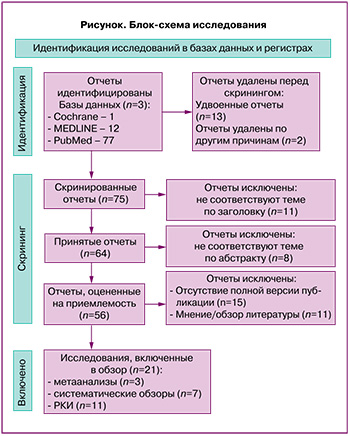
Проведена оценка информационных баз систем Cochrane, MEDLINE, PubMed. Keywords (слова для поиска): «premenstrual syndrome» и «Vitex agnus-castus». Глубина поиска составила 30 лет (1997–2026 гг.). При проведении нарративного обзора с элементами систематического поиска руководствовались основными рекомендациями PRISMA [15, 16].
Блок-схема исследования представлена на рисунке.
Результаты
В результате проведенного поиска обнаружено в базе Cochrane – 1 публикация, MEDLINE – 12 публикаций, PubMed – 77 публикаций. После объединения данных, удаления удвоенных отчетов, неполнотекстовых публикаций, публикаций, не соответствующих тематике, в обзор включена 21 публикация: 3 метаанализа, 7 систематических обзоров и 11 рандомизированных контролируемых исследований (РКИ).
Первая публикация датируется 1997 г. В РКИ сравнивалась эффективность VAC и пиридоксина у женщин с ПМС: в течение трех циклов лечения VAC продемонстрировал значительно более выраженное облегчение типичных жалоб ПМС, таких как болезненность груди, отеки, внутреннее напряжение, головная боль, запор и депрессия [17].
В таблице 1 представлено количество проведенных исследований, количество пациенток, включенных в исследования, и эффективность VAC в уменьшении симптомов ПМС, по данным метаанализов.
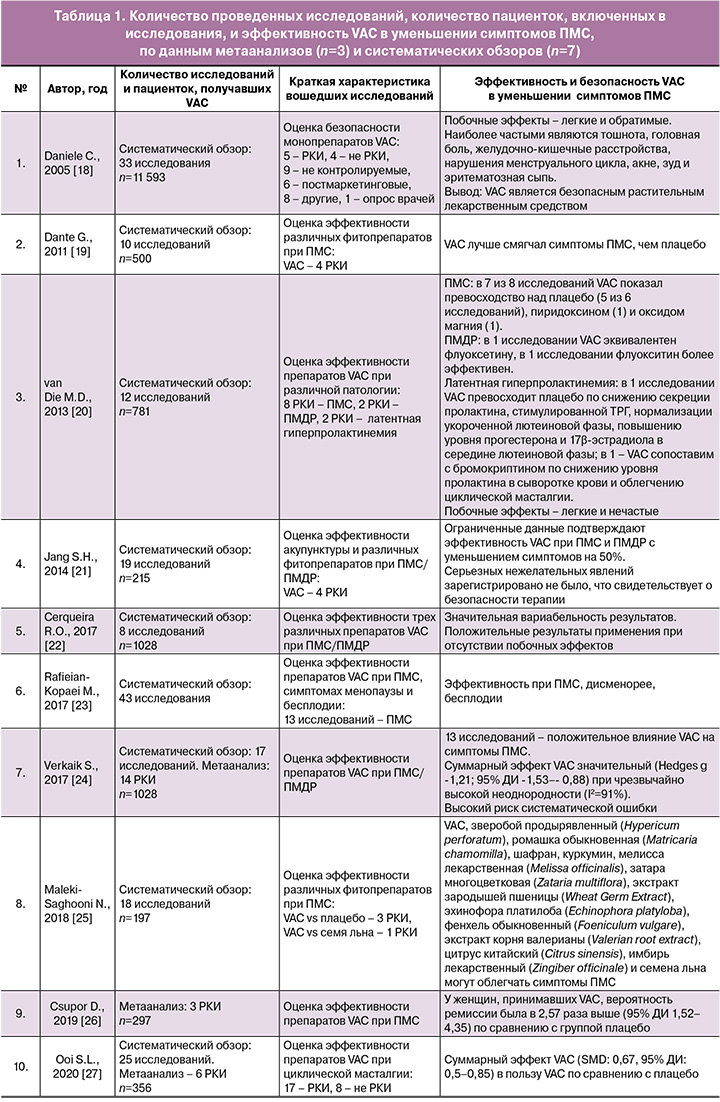
Данные 10 систематических обзоров и метаанализов с участием более 11 000 пациенток подтверждают, что VAC эффективно уменьшает симптомы ПМС и обладает благоприятным профилем безопасности. Однако все исследования отличаются высокой гетерогенностью и имеют высокий риск смещения.
В таблице 2 представлена краткая характеристика исследований (дизайн, популяция, препарат, доза, первичная конечная точка, продолжительность), эффективность VAC при лечении симптомов ПМС и его безопасность.
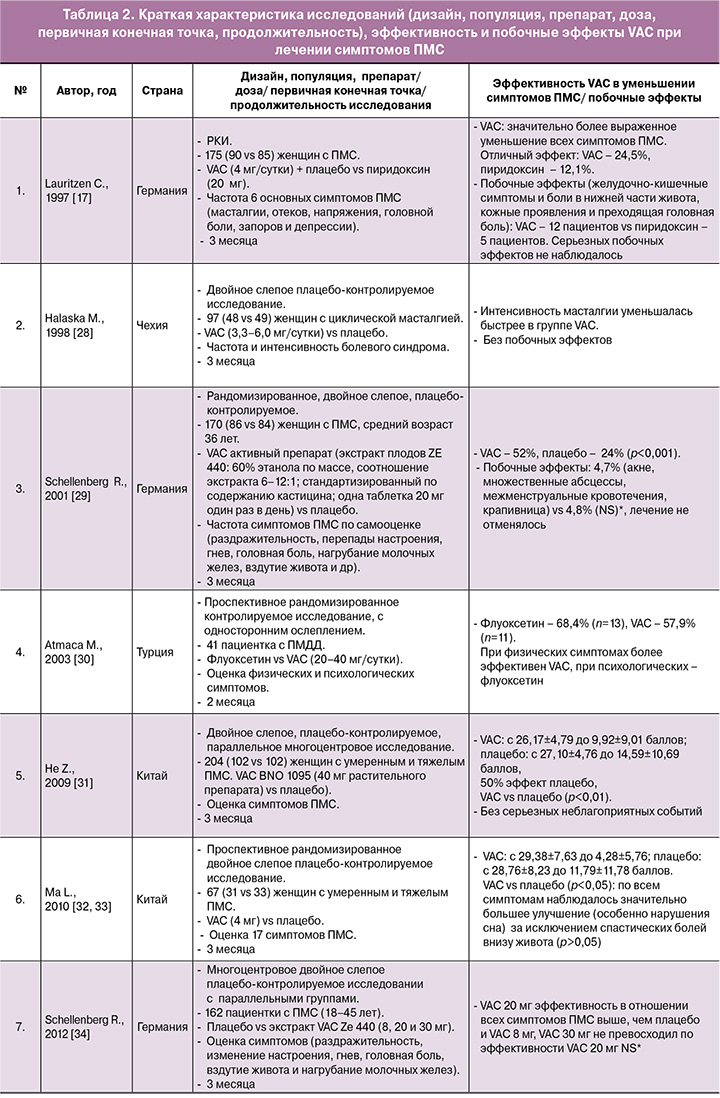
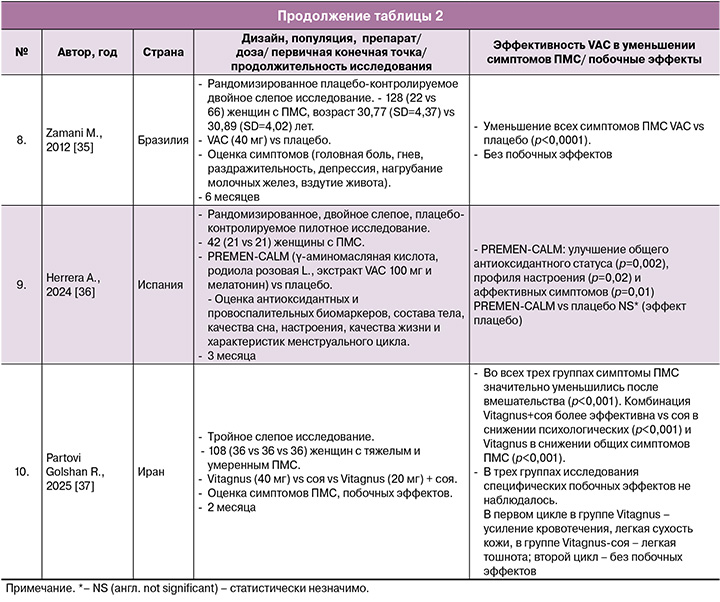
В обзор включены 10 РКИ, которые были проведены за период 1997–2025 гг. на трех континентах, в 8 странах: Китай, Иран, Чехия, Германия, Испания, Австралия, Турция, Бразилия. Семь РКИ были плацебо-контролируемые, в том числе, 6 – двойные слепые, 1 исследование – с односторонним ослеплением и 1 –тройное слепое. Две публикации Ma L. (2010) [32, 33] посвящены описанию одного РКИ.
Большинство исследований включали пациенток с ПМС [17, 29, 32–37], в том числе с умеренными и тяжелыми формами [31–33, 37]; 1 исследование – пациенток с циклической масталгией как наиболее частым симптомом ПМС [28]; 1 исследование – пациенток с предменструальным дисфорическим расстройством (ПМДР) [30].
В одном исследовании авторы сравнивали эффективность различных доз VAC с плацебо. Оптимальная по эффективности доза VAC составила 20 мг, при увеличении дозы до 30 мг эффективность лечения не повышалась [34].
Сравнение эффективности VAC при ПМДР проводили с СИОЗС (флуоксетином) [30], при ПМС – с пиридоксином [17].
В 1 исследовании проводилось сравнение эффективности в трех группах: препарата VAC (Vitagnus), сои и комбинации препарата VAC (Vitagnus) и сои. Высокая эффективность в отношении симптомов ПМС продемонстрирована во всех группах, однако купирование симптомов ПМС было более значимым при комбинированном подходе [37].
Результаты проведенного анализа продемонстрировали, что VAC достоверно превосходит плацебо в снижении как физических, так и психологических симптомов ПМС (раздражительность, головная боль, нагрубание молочных желез, вздутие живота, депрессия и др.) [31–33].
Эффективность VAC сопоставима с пиридоксином [17] и флуоксетином [30] при физических симптомах, однако флуоксетин лучше действовал на психологические симптомы [30].
Оптимальная доза VAC в большинстве исследований – 20–40 мг/сут [34, 35, 37]. Так, в исследовании Schellenberg R. дозы 20 мг и 30 мг показали сходную эффективность (20 мг признана достаточной), доза 8 мг работала слабее [29].
Значительное улучшение в большинстве исследований наблюдалось уже через 2–3 месяца [34, 36, 37], в исследовании Zamani M. стойкое снижение всех симптомов – через 6 месяцев (р<0,0001) [35].
VAC в комбинации c соей в одном исследовании показал лучшее снижение психологических симптомов, чем соя отдельно [37].
В большинстве исследований серьезных нежелательных явлений не зарегистрировано. Возможные легкие побочные эффекты: желудочно-кишечные симптомы, головная боль, кожные реакции, акне, межменструальные кровотечения (частота около 4–5%, не выше плацебо) [17, 28, 29, 31, 37]. При длительном приеме (до 6 месяцев) отмечалась хорошая переносимость препаратов VAC [35].
Проведенные до настоящего времени исследования имеют существенные ограничения, что связано с небольшими выборками пациенток (менее 100–200 участниц), использованием различными по стандартизации экстрактов (ZE 440 [34], BNO 1095 [31], Vitagnus [37]), что делает прямое сравнение доз в миллиграммах условным; а также применением в ряде работ VAC в составе комплексных препаратов: PREMEN-CALM в состав которого входили γ-аминомасляная кислота, родиола розовая L., VAC, витамин B6 и мелатонин [36], поэтому эффект трудно отнести только за счет VAC.
Обсуждение
Эффективность. Проведенный анализ данных метаанализов, систематических обзоров и РКИ свидетельствует о вероятно высокой клинической эффективности препаратов VAC в купировании симптомов ПМС. Тем не менее гетерогенность дизайнов исследований, различия в дозировках и методологические ограничения требуют осторожной интерпретации полученных выводов.
Результаты крупных метаанализов демонстрируют статистически значимое превосходство VAC над плацебо. Так, в работе Csupor D. et al. показано, что на фоне приема VAC вероятность достижения ремиссии возрастает в 2,57 раза [26]. Это коррелирует с выводами Verkaik S. et al., где суммарный размер эффекта (Hedges’ g) составил -1,21, что интерпретируется как значительное улучшение симптоматики. Однако авторы последнего метаанализа обращают внимание на крайне высокую гетерогенность включенных исследований (I²=91%), что ставит вопрос о воспроизводимости эффекта в различных популяциях и при различных режимах дозирования [24].
В систематическом обзоре van Die M.D. et al. [20] подчеркивается, что в 7 из 8 исследований по ПМС VAC продемонстрировал превосходство над плацебо, а в отдельных работах – над пиридоксином и оксидом магния. Интерес представляют данные исследования Atmaca M., где VAC показал сопоставимую с флуоксетином общую эффективность при лечении ПМДР, при этом было отмечено дифференцированное действие: флуоксетин лучше влиял на психологические симптомы, тогда как VAC – на физические проявления (масталгия, вздутие живота) [30]. Это подтверждает гипотезу о комплексном механизме действия VAC, связанном не только с дофаминергической активностью и нормализацией уровня пролактина (что подтверждено в работах van Die M.D. et al. при лечении латентной гиперпролактинемии), но и с возможным модулирующим влиянием на другие нейроэндокринные звенья.
Проблема дозирования и плацебо-эффекта. В таблице 2 обращает на себя внимание исследование Schellenberg R., демонстрирующее нелинейную зависимость «доза-эффект». Препарат в дозировке 20 мг показал значимое превосходство над плацебо, тогда как дозировка 30 мг не продемонстрировала статистически значимого улучшения исходов лечения. Это может указывать на наличие оптимального терапевтического окна и требует учета данного факта при подборе оптимальной дозировки препарата [29]. Кроме того, в ряде РКИ (He Z., 2009; Herrera A., 2024) обращает на себя внимание высокий плацебо-эффект (достигающий 50% в некоторых группах), что характерно для исследований в области психиатрии и психосоматики [31, 36]. Однако, несмотря на высокий плацебо-ответ, во многих цитируемых исследованиях (Zamani M. (2012); Ma L. (2010); Schellenberg R., (2001)) динамика улучшения в группе VAC была статистически значимо лучше, чем в контрольной группе [34, 35].
Безопасность терапии. Важным выводом, подтвержденным как систематическими обзорами (Daniele C. (2005)) [18], так и отдельными РКИ, является благоприятный профиль безопасности VAC. В исследованиях Schellenberg R. (2001) [34] и Zamani M. (2012) [35] частота побочных эффектов не отличалась от группы плацебо, а зарегистрированные нежелательные явления (легкие желудочно-кишечные расстройства, головная боль, кожные реакции) носили транзиторный характер и не требовали отмены терапии [34, 35]. Это выгодно отличает фитопрепарат от синтетических гормональных средств и антидепрессантов.
При этом в настоящее время клинические исследования по применению VAC при различных заболеваниях репродуктивной сферы продолжаются. Mirzaee F. et al. проведен метаанализ и систематический обзор по применению фитотерапии при циклической масталгии [38]. Проведены РКИ по оценке эффективности VAC при сексуальной дисфункции у пациенток с бесплодием и показана его эффективность [10, 39]. Продемонстрирована его эффективность у пациенток с гиперпролактинемией [40], нарушениями менструального цикла и преждевременной овариальной недостаточностью [41], бесплодием и СПЯ [42–44], менопаузальными расстройствами [45, 46].
Ограничения проведенного анализа. При интерпретации данных необходимо учитывать ряд ограничений. Во-первых, значительная вариабельность результатов, отмеченная в обзоре Cerqueira R.O. (2017) [22], может быть следствием использования различных экстрактов VAC (разные производители, части растения, растворители), что затрудняет экстраполяцию результатов. Во-вторых, Maleki-Saghooni N. (2018) [25] и Dante G. (2011) [19] указывают на то, что VAC часто изучается в комбинации с другими растительными компонентами (зверобой, мелисса, соя), что не позволяет выделить «чистый» вклад каждого ингредиента в полученный исход лечения. В-третьих, Verkaik S. (2017) и ряд других авторов констатируют высокий риск систематической ошибки в первичных исследованиях, что требует подтверждения результатов в более крупных и методологически корректно спланированных проспективных исследованиях [24].
В настоящее время различные профессиональные сообщества по-разному трактуют доказательный уровень проведенных исследований: так, в соответствии с российскими клиническими рекомендациями «Предменструальный синдром», VAC является терапией первой линии ПМС [2], Британский Королевский колледж акушеров-гинекологов относит VAC к дополнительным методам лечения симптомов ПМС [3], Американский колледж акушеров-гинекологов, ориентируясь в первую очередь на лечение ПМДР, сдержанно относится к применению VAC [47]. По мнению большинства исследователей, VAC представляется эффективным препаратом, однако необходимы дальнейшие исследования для окончательного подтверждения его преимуществ. При этом важно помнить, что фитотерапия может быть тоже связана с различными непредсказуемыми взаимодействиями [48, 49]. Несмотря на высокую доказанную эффективность дроспиренон-содержащих комбинированных оральных контрацептивов при ПМС [50–51], их частое назначение без достаточного анализа состояния пациентки может повлечь за собой риски для здоровья, а также оказать неблагоприятное влияние на возможность реализации репродуктивной функции [52]. Кроме того, необходимость проведения дальнейших исследований в этом направлении обусловлена глобальной тенденцией к росту распространенности ПМС во многих популяциях и прогнозом значимого влияния этого заболевания на психическое, физическое и социальное благополучие женщин во всем мире [53, 54].
Заключение
Таким образом, Vitex agnus-castus может рассматриваться как вариант клинически обоснованной терапии у пациенток с легким и умеренным ПМС, преимущественно при преобладании соматических симптомов, при условии применения стандартизированных препаратов и учета ограничений доказательной базы.
В России средства на основе экстракта VAC представлены лекарственными препаратами «Циклодинон» и «Мастодинон», а также рядом БАД. Наибольшая доказательная база накоплена при курсовом приеме препаратов VAC продолжительностью не менее трех менструальных циклов. Однако высокая гетерогенность исследований диктует необходимость проведения дополнительных мультицентровых РКИ с унифицированными протоколами для уточнения места VAC в клинических рекомендациях и определения предикторов наилучшего ответа на терапию.