
Locomotive syndrome in women with musculoskeletal syndrome of menopause
Dobrokhotova Yu.E., Khashukoeva A.Z., Naumov A.V., Nosova L.A., Agaeva M.I., Kuznetsov D.A.
There ae more than 21 million postmenopausal women in Russia. Estrogen deficiency in postmenopause contributes to the development of osteoporosis, sarcopenia, and osteoarthritis, leading to mobility impairments. The concept of locomotive syndrome (LS) has been proposed for integral assessment of these impairments. However, LS in women with musculoskeletal syndrome of menopause (MSM) is understudied.
Objective. To explore the prevalence and severity of LS in women aged 50–60 with climacteric syndrome (CS) and MSM.
Materials and methods. The cross-sectional study included 180 postmenopausal women of 50–60 years of age with musculoskeletal diseases (osteoarthritis, osteopenia, osteoporosis, sarcopenia). The severity of CS (mild, moderate, severe) was evaluated using the Greene Climacteric Scale (GCS). LS was assessed using the stand-up test, the two-step test, and the 25-question Geriatric Locomotive Function Scale (GLFS-25). Bone mineral density (BMD was assessed using Radiofrequency Echographic Multi Spectrometry (REMS). The skeletal muscle mass was measured by bioelectrical impedance analysis (BIA). Statistical data processing was performed using the Kruskal–Wallis test, Pearson’s chi-squared test, and Spearmans’s correlation.
Results. LS was detected in 88.3% of women. Stage 1 LS was in 43.9%, stage 2 LS was in 20.0%, stage 3 LS was in 24.4%. The frequency of stage 3 LS was high in women with moderate CS (43.9%), and low in women with severe CS (10.7%), p<0.0001. Osteoarthritis was diagnosed in 72.8% of women, osteopenia in 39.7%, osteoporosis in 28.9%, and sarcopenia in 11.6%; and 35.0% of patients reported back pain. The prevalence of osteoarthritis was significantly higher in the group with severe CS (82.1%) compared to the group with mild CS (60.3%), p=0.026. Sarcopenia was significantly more common in the group with moderate CS (21.2%) compared to the groups with mild CS (3.5%) and severe CS (8.9%), p=0.0063. In patients with severe CS, femoral neck BMD (0.84±0.17 g/cm²) was significantly higher compared to the group with moderate CS (0.71±0.16 g/cm²), p<0.0001. A similar trend was noted for spine BMD (0.95±0.16 versus 0.87±0.16 g/cm², p=0.0375). The skeletal muscle mass assessed by BIA, was also high in the group with severe CS (23.33±3.16 kg) compared to the group with moderate CS (21.35±3.40 kg), p=0.0072. Women with CS tended to have lower vitamin D with increasing severity of CS (29.14±8.55 ng/ml in the group with mild CS, 28.03±8.75 ng/ml in the group with moderate CS, and 25.80±8.51 ng/ml in the group with severe CS, p=0.0948).
Conclusion. High prevalence of LS was in women aged 50–60 with CS and MSM. The most severe mobility impairments were associated with moderate course of CS and prolonged postmenopause.
Authors' contributions. Dobrokhotova Yu.E., Khashukoeva A.Z., Naumov A.V., Nosova L.A. – the study concept and design; Nosova L.A., Agaeva M.I., Kuznetsov A.D. – material collection and processing, statistical data processing; Khashukoeva A.Z., Nosova L.A. – manuscript writing; Dobrokhotova Yu.E., Khashukoeva A.Z., Naumov A.V. – manuscript editing.
Conflicts of interest. The authors declare that they have no conflict of interests.
Funding. The study was carried out without any sponsorship.
Ethical Approval. The study was approved by the local Ethics Committee of Pirogov Russian National Research Medical University, Ministry of Health of Russia (protocol No. 213 of December 13, 2021).
Generative Artificial Intelligence. No generative AI was used in preparing this article.
Patient Consent for Publication. The patients have signed informed consent for publication of their data.
Authors' Data Sharing Statement. The data supporting the findings of this study are available on request from the corresponding author after approval from the principal investigator.
For citation: Dobrokhotova Yu.E., Khashukoeva A.Z., Naumov A.V., Nosova L.A., Agaeva M.I., Kuznetsov D.A. Locomotive syndrome in women with musculoskeletal syndrome of menopause.
Akusherstvo i Ginekologiya/Obstetrics and Gynecology. 2026; (7): 136-144 (in Russian)
https://dx.doi.org/10.18565/aig.2026.163
Keywords
climacteric syndrome
locomotive syndrome
postmenopause
osteoporosis
sarcopenia
mobility impairments
the Greene Climacteric Scale (GCS)
REMS
GLFS-25
Increasing life expectancy and demographic aging of the population lead to a steady increase in the number of peri- and postmenopausal women. more than 21 million women in the Russian Federation experience progressive estrogen deficiency, spending more than one-third of their lives in this state [1]. Maintaining functional activity and quality of life in this group of patients is a priority medical and social task.
Estrogen deficiency is recognized as a key factor that accelerates aging of the musculoskeletal (MSK) system. It's known that a decline in sex hormone levels contributes not only to the loss of bone mineral density (BMD), leading to osteopenia and osteoporosis, but also to degenrative changes in skeletal mucles (sarcopenia) and the progression of osteoarthritis [2–6].
These processes form the musculoskeletal syndrome of menopause (MSM). According to expert estimations, it affects up to 70% of middle-aged women, and in 25% of cases leads to significant limitations in daily activities [7, 8].
Despite high prevalence of MSM, the musculoskeletal complaints (diffuse muscle and joint pain, reduced mobility, difficulty walking) often remain underestimated both by patients and doctors during outpatient visits, giving way to discussion of vasomotor and emotional and psychological symptoms [9, 10]. At the same time, musculoskeletal disorders are the leading cause of disability and mobility loss in people over 50 [11, 12].
In recent years, the concept of locomotive syndrome (LS) has been actively used to assess the functional state of the musculoskeletal system and predict the risk of mobility loss [13–15]. LS reflects the degree of mobility impairment and self-care deficit due to musculoskeletal disorders. Epidemiological studies indicate extremely high prevalence of LS in postmenopausal women. According to some estimates it reaches 88%, that is significantly higher than in the general population [16, 17].
However, the data on the severity of mobility impairments associated with musculoskeletal disorders in women with climacteric syndrome (CS) remain insufficient and contradictory in the available literature [5, 18].
The objective of the study was to explore the prevalence and severity of LS in women aged 50–60 with the musculoskeletal syndrome of menopause (MSM)
Materials and methods
The cross-sectional study was carried at the Department of Obstetrics and Gynecology of the Institute of Surgery, Russian Gerontological Scientific and Clinical Center, RNRMU, Ministry of Health of Russia in the period from 2021 to 2015. The protocol of the study was approved by the local Ethics Committee of RNRMU (protocol No. 213 of December 13, 2021). All participants have signed voluntary informed consent.
The study included 180 women in postmenopause aged from 50 to 60 years with clinically confirmed climacteric syndrome (CS) and musculoskeletal (MSK) disorders.
Inclusion criteria: age of 50–60 years; natural menopause (amenorrhea duration ≥12 months) occurred at the age of 45–55; the presence of the severity of climacteric syndrome according the Greene Climacteric Scale; the musculoskeletal syndrome of menopause; written informed consent.
Non-inclusion criteria: decompensated somatic disorder (chronic kidney disease with a glomerular filtration rate of <30 mL/min, cardiovascular diseases, decompensated liver diseases); type 1 diabetes mellitus or decompensated type 2 diabetes mellitus; other endocrine disorders that can affect the musculoskeletal system; cancers of any location; musculoskeletal disorders that significantly limit the ability to perform functional tests (aseptic necrosis of the femoral or tibial condyles, surgeries for large joints of the lower limbs); neurological and mental disorders (neurodegenerative diseases, stroke with residual motor impairment, severe cognitive impairment); exacerbation of chronic diseases or the presence of an acute disease at the time of inclusion in the study; alcohol abuse; using the drugs that affect bone metabolism (glucocorticosteroids, antiresorptive agents); using menopausal hormone therapy, taking vitamin D and calcium supplements at the time of the study; refusal to participate in the study.
The severity of CS was assessed using the validated Greene Climacteric Scale [19], a tool that is used to measure 21 menopause symptoms including psychological (anxiety, depression), somatic and vasomotor symptoms. The patients responded to the symptom severity questionnaire on a 4-point Likert scale (0 – absence of symptoms, 1 – mild, 2 – moderate, 3 – severe). Based on the total score, all women were divided into 3 groups: group 1 – mild CS (1 – 11 points, n=58), group 2 – moderate CS (12 – 19 points, n=66), group 3 – severe CS (≥ 20 points, n=56).
LS was diagnosed in accordance with the Japanese Opthopaedic Association recommendations using standardized tests [13–15]:
- The two-step test calculates the distance covered in two maximum strides divided by height.
- The sit-to stand test evaluates lower extremity muscle strength, balance, and how many times a person can rise to a standing position from 40, 30, 20 и 10 cm chair height.
- The 25-question Geriatric Locomotive Function Scale (GLFS-25) including 25 questions about pain, stiffness, and limitations in daily activities (scores between 0 and 100).
Stages (1, 2 or 3) of osteoporosis were determined based on the worst scores of three tests. Bone mineral density (BMD) in the lumbar spine (L1–L4) and femoral neck was measured using radiofrequency echographic multi spectrometry (REMS). The T-scores were interpreted according to the WHO criteria: normal bone mass (T≥-1.0 SD), osteopenia (T-score between -1.0 and -2.5 SD), osteoporosis (T≤-2.5 SD). Additionally, fragility score and 10-year absolute fracture risk were assessed using the FRAX algorithm (FRAX model for Russia) excluding BMD.
The skeletal muscle mass was measured using bioelectrical impedance analysis (BIA). Muscle strength was measured by hand-held dynamometry. Lower extremity function was assessed using the Short Physical Performance Battery (SPPB), including the balance test, the 4-meter walk test, the five-time chair rise test without using arms or hands, and the Get up and Go Test. Sarcopenia screening was performed using the SARC-F questionnaire (the total score of ≥4 points indicated a high risk). Serum levels of vitamin D were measured using chemiluminescent immunoassay.
Statistical data analysis was performed using software programs Statistica 10 andи SAS JMP 11. Depending on the type of distribution, the quantitative data are shown as the arithmetic mean and standard deviation (M±SD) or as the median and the interquartile range (Me [Q25; Q75]). The qualitative data are shown as the absolute numbers and the percentage. Three independent groups were compared for quantitative variables using the Kruskal–Wallis test, and for binary and nominal variables using the Pearson chi-squared. Correlation analysis was performed using Spearman's rank correlation coefficient. The differences were considered to be statistically significant at p<0.05.
Results
The study included 180 women in postmenopause. The median age of women was 56.30±3.14 years, duration of postmenopause was 5.94±2.86 years. Distribution of the severity of climacteric syndrome based on the Greene Climacteric Scale was comparable: 58/180 (32.2%) patients had mild CS, 66/180 (36.7%) had moderate and 56/180 (31.1%) had severe CS. The groups were comparable in BMI, height and duration of postmenopause. However, the patients with moderate CS were of significantly higher age (57.35±2.85 years) compared to women with severe CS (55.46±2.82 года), p=0.0033. The main clinical and anamnestic characteristics are shown in Table 1.
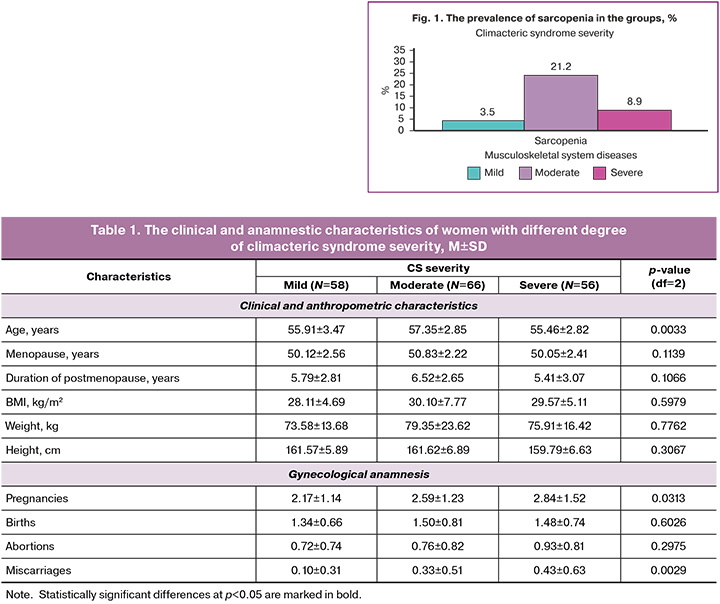
The study sample was characterized by high prevalence of the diseases of the musculoskeletal system. Osteoarthritis was diagnosed in 131/180 (72.8%) women, osteopenia in 71/180 (39.7%), osteoporosis in 52/180 (28.9%), sarcopenia in 21/180 (11,6%); 63/180 (35.0%) patients reported having back pain. The frequency of osteoarthritis was significantly higher in the group with severe CS (82.1%) compared to the group with mild CS (60.3%), p=0.026. Sarcopenia was significantly more often detected in the group with moderate CS (21.2%) compared to the groups with mild (3.5%) and severe (8.9%) CS, p=0.0063 (Fig. 1).
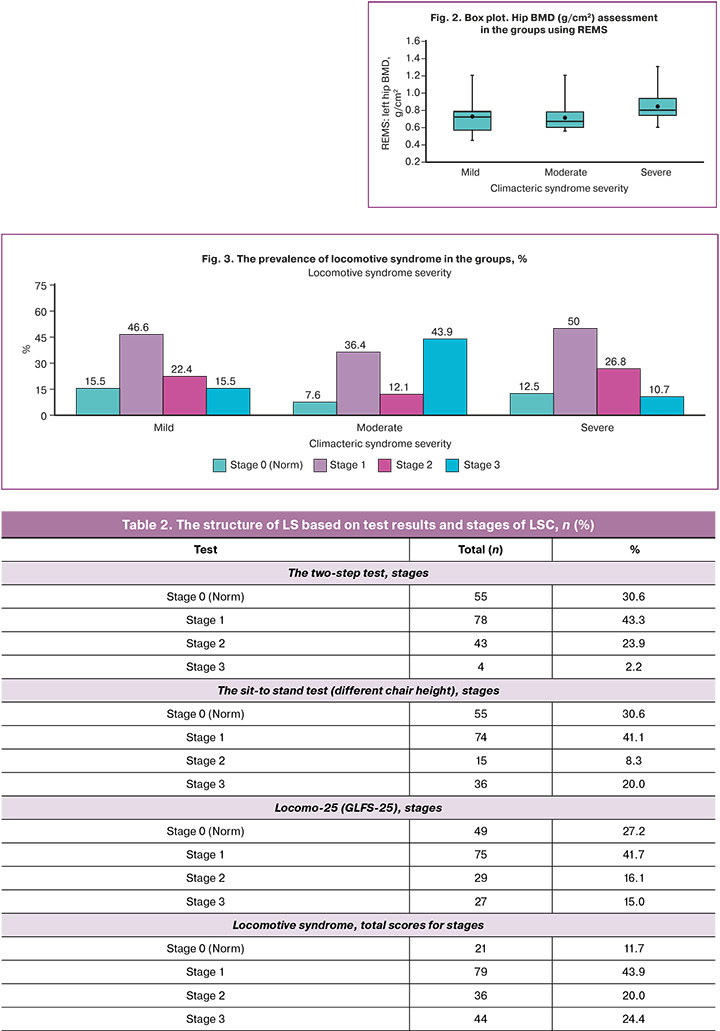
Analysis of bone mineral density found that in patients with severe CS, femoral neck BMD (0.84±0.17 g/cm²) was significantly higher than in the group with moderate CS (0.71±0.16 g/sm²), p<0.0001. Similar trend was noted for spine BMD (0.95±0.16 versus 0.87±0.16 g/sm², p=0.0375). In the group with severe CS, the T-score for femoral neck was 0.79±1.26 SD, whereas in the group with moderate KS, it was 1.48±1.21 SD, p=0.0078 (Fig. 2).
According to BIA, the skeletal muscle mass was higher in the group with severe CS (23.33±3.16 кг) compared to the group with moderate CS (21.35±3.40 kg), p=0.0072. The level of vitamin D tended to reduce with the severity of CS (29.14±8.55 ng/ml in the group with mild CS, 28.03±8.75 ng/ml in the group with moderate CS, and 25.80 ± 8.51 ng/ml in the group with severe CS, p=0.0948).
LS was diagnosed in 159/180 (88.3%) women.
Stages of LS were determined by the worst scores of three tests. Distribution of stages of LS in the general sample (Table 2) was the following: stage 1 – 79/180 (43.9%) patients, stage 2 – 36/180 (20.0%), stage 3 – 44/180 (24,4%), stage 0 – 21/180 (11,7%). Analysis found statistically significant differences in distribution of stages of LS depending on the severity of CS. In the group with moderate CS, LS Stage 3 was in 29/66 (43.9%) women, whereas in the groups with mild and severe CS it was 9/58 (15.5%) and 6/56 (10.7%), respectively, p=0.0008 (Fig. 3).
The severity of LS was associated with significant worsening of the indicators of physical performance. In patients with LS Stage 3, the walking speed was 0.78±0.14 m/sec versus 0.92±0.09 m/sec in the group without LS (p<0.0001). The overall time to complete the Get up and Go Test was – 8.69±2.27 sec versus 7.22±1.99 sec (p=0.0022). The total score of SPPB was 8.25±1.88 versus 9.52±2.11 (p=0.0003). In addition, in women with LS Stage 3, T-scores were significantly lower both for femoral neck BMD (-1.78±0.94 SD versus -1.19±1.39 SD in women without LS, p=0.0044), and for spine BMD (-1.80±0.92 SD versus -1.22±1.26 SD, p=0.0038).
Discussion
Our study showed high prevalence of LS (88.3%) in postmenopausal women aged 50–60 years with the musculoskeletal syndrome.
The data obtained in our study on the prevalence LS are consistent with the results of multiple domestic studies. For example, the study by S.V. Topolyanskaya et al. (2023) reported that the detection rate of LS in women in postmenopause reached 88.4% [16]. At the same time, in Japan, where the concept of LS has been developed and introduced into clinical practice, the prevalence of LS among middle-aged women varies considerably depending on the criteria used. According to a nationwide online survey in Japan, the prevalence of LS people aged 50–60 years is about 8–12% [20], that is significantly lower than the prevalence of LS in Russia and can be explained by different assessment methods, as well as ethnic and social characteristics of the population [21]. It is important to note that the studies in Japan have shown that a greater proportion of women than men had locomotive syndrome, that emphasizes the role of sex hormones in the pathogenesis of impaired mobility [22].
High prevalence of the musculoskeletal disorders in our sample (osteoarthritis – 72.8%, osteopenia – 39.7%, osteoporosis – 28.9%, sarcopenia – 13.1%) is consistent with the global epidemiological data, despite the fact that the sample in our study included only women with musculoskeletal disorders. According to the systematic review by Xiao P.L. et al. (2022), the global prevalence of osteoporosis among adult population is 19.7%, with rates being significantly higher among women in postmenopause [23]. According to the Federal clinical recommendation, in Russia’s female population, osteoporosis is detected in 34% of women over 50, and one in four women have experienced pathologic fractures [24]. The prevalence of osteopenia (39.7%) in our study was also comparable with the results of large cohort studies and showed that BMD lower that the age-matched normal range was observed in one-third of women in the first 5–10 years in postmenopause [25].
Estrogen deficiency is associated with the loss of muscle mass loss that was confirmed by the data reported in the study by Messier V. et al. (2011). They showed that low estrogen levels in menopause can play a key role in the development of sarcopenia after the age of 50 [26]. The protective effect of menopausal hormone therapy on bone mineral density has been demonstrated in randomized clinical trials. Menopausal hormone therapy prevents the loss of BMD regardless of the route of administration, including at low doses, and reduces the risk of osteoporotic fractures. [27, 28].
However, the group with moderate CS was characterized by longer duration of postmenopause (though the differences between the groups did not reach statistical significance) and lower T-scores for femoral neck BMD (0.71±0.16 g/sm).
Correlation analysis confirmed a negative correlation between duration of postmenopause and femoral neck BMD (Rs=-0.24; p<0.01), as well as a positive correlation with the Charlson comorbidity index (Rs=0.45; p<0.01), that conforms the conventional understanding of the pathogenesis of age-related diseases [3, 18]. Accelerated bone loss in the first years of menopause is a well-documented phenomenon. According to Svejme O. et al. (2012), the women who experience early menopause are at a high risk for osteoporosis and fractures in the subsequent 34 years of observations [29].
The identified negative correlation between the level of vitamin D and severity of CS (Rs=-0.21; p<0.01) requires separate discussion. Vitamin D deficiency is common among postmenopausal women and is associated not only with reduced BMD, but also with severe climacteric disorders [30]. In our study, the average level of vitamin D decreased up to 27.69±8.67 ng/ml. This indicates the need for screening and correction of vitamin D deficiency in this category of patients.
It is interesting to note that in patients with LS Stage 3, sarcopenia was detected more often (29.5% versus 4.7% in patients with stage 0, p=0.0005), as well as osteoporosis (45.5% versus 38.1%, p=0.0155). A combination of sarcopenia and osteoporosis, known as osteosarcopenia, is a syndrome associated with a high risk of falls, fractures and disability [31]. The coexistence of steoporosis and sarcopenia in postmenopause is associated with estrogen deficiency. The RANK/RANKL/OPG system induces activation of bone resorption, at the same time promotes muscle loss through apoptotic mechanisms and decline in muscle protein synthesis [32].
It should be noted that in our study, traditional fracture risk assessment using the FRAX calculator showed no statistically significant differences between the groups, that can indicate insufficient sensitivity of this assessment tool for women aged 50–60 years. The limitations of FRAX were also reported in other studies. The FRAX algorithms do not take into account the dose-dependent effect of glucocorticoids, the l evels of vitamin D, smoking and a number of other factors, that can lead to underestimation of the risk in certain categories of patients [33].
The obtained data are of interest for clinical practice, since they demonstrated the need to shift the focus from separate assessment of vasomotor symptoms to comprehensive diagnosis of mobility impairments in postmenopausal women. As is shown in a recent review by Wright V.J. et al. (2024), the introduction of the notion of “musculoskeletal syndrome of menopause” reflects the growing understanding of the importance of interdisciplinary approach to management of this category of patients and the need to integrate musculoskeletal syndrome assessment into routine gynecological practice [10].
Thus, LS has become widespread, but often remains an underestimated component of menopausal disorders. Outpatient doctors, primarily gynecologists and therapists, should pay special attention to patients with moderate CS and duration of postmenopause more than 5 years, since this cohort of patients are at a greater risk for progressive mobility loss and disability.
Conclusion
Therefore, LS is detected in the vast majority (88.3%) of postmenopausal women aged 50–60 with CS and the musculoskeletal syndrome. Moreover, the most severe mobility impairments are associated not only with extreme severity of menopausal disorders, but also with moderate course against the backdrop of postmenopause duration of ≥5 years and reduced BMD (T-scores for femoral neck <-1.5 SD). The data obtained in this study justify the need for interdisciplinary approach to management of postmenopausal women including screening for LS in routine gynecologic care. A promising direction for further research is to assess the effect of menopausal hormone therapy and physical rehabilitation programs on the dynamics of mobility impairments in this category of patients.
References
- Schoenaker D.A.J.M., Jackson C.A., Rowlands J.V., Mishra G.D. Socioeconomic position, lifestyle factors and age at natural menopause: a systematic review and meta-analyses of studies across six continents. Int. J. Epidemiol. 2014; 43(5): 1542-62. https://dx.doi.org/10.1093/ije/dyu094
- Министерство здравоохранения Российской Федерации. Клинические рекомендации. Менопауза и климактерическое состояние у женщины. 2025. [Ministry of Health of the Russian Federation. Clinical guidelines. Menopause and menopausal syndrome in women. 2025 (in Russian)].
- Tulloh L. Restoring trust in menopause management: menopause hormone therapy is not a panacea, and physical activity remains a critical intervention. Br. J. Sports Med. 2025; 59(12): 828-9. https://dx.doi.org/10.1136/bjsports-2025-110217
- Сулима А.Н., Булюк В.В., Митрофанова О.А. Постменопаузальный остеопороз. Акушерство и гинекология. 2023; 9: 52-9. https://dx.doi.org/10.18565/aig.2023.103 [Sulima A.N., Bulyuk V.V., Mitrofanova O.A. Postmenopausal osteoporosis. Obstetrics and Gynecology. 2023; (9): 52-9 (in Russian). https://dx.doi.org/10.18565/aig.2023.103].
- Носова Л.А., Хашукоева А.З., Наумов А.В., Соловьева А.М., Смагина Ю.А. Тяжесть климактерического синдрома и нарушений мобильности при заболеваниях костно-мышечной системы у женщин с разными типами менопаузы. Акушерство и гинекология. 2025; 3: 92-100 https://dx.doi.org/10.18565/aig.2025.50 [Nosova L.A., Khashukoeva A.Z., Naumov A.V., Soloveva A.M., Smagina Yu.A. The severity of the climacteric syndrome and mobility impairments in women with musculoskeletal disorders and different types of menopause. Obstetrics and Gynecology. 2025; (3):92-100 (in Russian). https://dx.doi.org/10.18565/aig.2025.50].
- Доброхотова Ю.Э., Хашукоева А.З., Наумов А.В., Носова Л.А., Проскурякова А.С., Кузнецов Д.А. Возможности прогнозирования риска развития тяжелого локомотивного синдрома у женщин с климактерическим синдромом в возрасте 50–60 лет. Акушерство и гинекология. 2026; 4: 134-42 https://dx.doi.org/10.18565/aig.2026.117 [Dobrokhotova Yu.E., Khashukoeva A.Z., Naumov A.V., Nosova L.A., Proskuryakova A.S., Kuznetsov D.A. Possibilities for the risk prediction of severe locomotive syndrome in 50–60-year-old women with climacteric syndrome. Obstetrics and Gynecology. 2026; (4): 134-42 (in Russian). https://dx.doi.org/10.18565/aig.2026.117].
- Mishra G.D., Dobson A.J. Using longitudinal profiles to characterize women’s symptoms through midlife: results from a large prospective study. Menopause. 2012; 19(5): 549-55. https://dx.doi.org/10.1097/gme.0b013e3182358d7c
- Jin Z., Tian C., Kang M., Hu S., Zhao L., Zhang W. The 100 top-cited articles in menopausal syndrome: a bibliometric analysis. Reprod. Health. 2024; 21(1): 47. https://dx.doi.org/10.1186/s12978-024-01770-9
- Кузнецова Л.В., Павловская Е.А., Зазерская И.Е. Влияние эстроген-гестагенной терапии на клинические проявления суставного синдрома у женщин в климактерическом периоде. Фарматека. 2016; 3(316): 57-61 [Kuznetsova L.V., Pavlovskaya E.A., Zazerskaya I.E. The effect of estrogen-progestin therapy on the clinical manifestations of joint syndrome in women during menopause. Farmateka. 2016; 3(316): 57-61 (in Russian)].
- Wright V.J., Schwartzman J.D., Itinoche R., Wittstein J. The musculoskeletal syndrome of menopause. Climacteric. 2024; 27(5): 466-72. https://dx.doi.org/10.1080/13697137.2024.2380363
- Guan S.Y., Zheng J.X., Zhang S.X., Xu S., Shuai Z., Cai H.Y. et al. Global burden of musculoskeletal disorders in adults aged 50 and over, 1990-2021: risk factors and sociodemographic inequalities. J. Cachexia Sarcopenia Muscle. 2025; 16(4): e70008. https://dx.doi.org/10.1002/jcsm.70008
- Hawker G.A., King L.K. The burden of osteoarthritis in older adults. Clin. Geriatr. Med. 2022; 38(2): 181-92. https://dx.doi.org/10.1016/j.cger.2021.11.005
- Nakamura K. A «super-aged» society and the «locomotive syndrome». J. Orthop. Sci. 2008; 13(1): 1-2. https://dx.doi.org/10.1007/s00776-007-1202-6
- Shibata S., Kon S. Functional ingredients associated with the prevention and suppression of locomotive syndrome: a review. Biol. Pharm. Bull. 2024; 47(12): 1978-91. https://dx.doi.org/10.1248/bpb.b24-00443
- Наумов А.В., Ховасова Н.О., Мороз В.И., Мешков А.Д., Маневич Т.М., Деменок Д.В. Локомотивный синдром: новое представление о хрупкости в пожилом возрасте. Российский журнал гериатрической медицины. 2021; 3(7): 372-8. https://dx.doi.org/10.37586/2686-8636-3-2021-364-370 [Naumov A.V., Khovasova N.O., Moroz V.I., Meshkov A.D., Manevich T.M., Demenok D.V. Locomotive syndrome: a new view of fragility in older age. Russian Journal of Geriatric Medicine. 2021; 3(7): 372-8 (in Russian) https://dx.doi.org/10.37586/2686-8636-3-2021-364-370].
- Тополянская С.В., Романова М.А., Вакуленко О.Н., Бубман Л.И., Елисеева Т.А., Ларина Д.С., Рачина С.А., Дворецкий Л.И. «Локомотивный синдром» в практике гериатрического стационара. Медицинский алфавит. 2023; 13: 36-41. https://dx.doi.org/10.33667/10.33667/2078-5631-2023-13-36-41 [Topolyanskaya S.V., Romanova M.A., Vakulenko O.N., Bubman L.I., Eliseeva T.A., Larina D.S., Ratchina S.A., Dvoretski L.I. «Locomotive syndrome» in patients in the geriatric hospital. Medical alphabet. 2023; 13: 36-41 (in Russian) https://dx.doi.org/10.33667/10.33667/2078-5631-2023-13-36-41].
- Ikemoto T., Arai Y.C. Locomotive syndrome: clinical perspectives. Clin. Interv. Aging. 2018; 13: 819-27. https://dx.doi.org/10.2147/CIA.S148683
- Osawa Y., Arai Y., Takayama M., Hirata T., Abe Y., Ishizaki T. et al. Longitudinal association between muscle and bone loss: results of US and Japanese cohort studies. J. Cachexia Sarcopenia Muscle. 2024; 15(2): 746-55. https://dx.doi.org/10.1002/jcsm.13438
- Greene J.G. Constructing a standard climacteric scale. Maturitas. 1998; 29(1): 25-31. https://dx.doi.org/10.1016/S0378-5122(98)00025-5
- Kimura A., Seichi A., Konno S., Yabuki S., Hayashi K. Prevalence of locomotive syndrome in Japan: a nationwide, cross-sectional Internet survey. J. Orthop. Sci. 2014; 19(5): 792-7. https://dx.doi.org/10.1007/s00776-014-0606-3
- Ishibashi H. Locomotive syndrome in Japan. Osteoporos. Sarcopenia. 2018; 4(3): 86-94. https://dx.doi.org/10.1016/j.afos.2018.09.004
- Yoshinaga S., Shiomitsu T., Kamohara M., Fujii Y., Chosa E., Tsuruta K.Lifestyle-related signs of locomotive syndrome in the general Japanese population: A cross-sectional study. J. Orthop. Sci. 2019; 24(6): 1105-9. https://dx.doi.org/10.1016/j.jos.2019.08.005
- Xiao P.L., Cui A.Y., Hsu C.J., Peng R., Ma N., Xu Z.H. et al. Global, regional prevalence, and risk factors of osteoporosis according to the World health organization diagnostic criteria: a systematic review and meta-analysis. Osteoporos. Int. 2022; 33(10): 2137-53. https://dx.doi.org/10.1007/s00198-022-06454-3
- Белая Ж.Е., Белова К.Ю., Бирюкова Е.В., Дедов И.И., Дзеранова Л.К., Драпкина О.М., Древаль А.В., Дубовицкая Т.А., Дудинская Е.Н., Ершова О.Б., Загородний Н.В., Илюхина О.Б., Канис Д.А., Крюкова И.В., Лесняк О.М., Мамедова Е.О., Марченкова Л.А., Мельниченко Г.А., Никанкина Л.В., Никитинская О.А., Петряйкин А.В., Пигарова Е.А., Родионова С.С., Рожинская Л.Я., Скрипникова И.А., Тарбаева Н.В., Ткачева О.Н., Торопцова Н.В., Фарба Л.Я., Цориев Т.Т., Чернова Т.О., Юренева С.В., Якушевская О.В. Федеральные клинические рекомендации по диагностике, лечению и профилактике остеопороза. Остеопороз и остеопатии. 2021; 24(2): 4-47. https://dx.doi.org/10.14341/osteo12930 [Belaya Zh.E., Belova K.Yu., Biryukova E.V., Dedov I.I., Dzeranova L.K., Drapkina O.M., Dreval A.V., Dubovitskaya T.A., Dudinskaya E.N., Ershova O.B., Zagorodniy N.V., Ilyukhina O.B., Kanis J.A., Kryukova I.V., Lesnyak O.M., Mamedova E.O., Marchenkova L.A., Mel’nichenko G.A., Nikankina L.V., Nikitinskaya O.A., Petryaikin A.V., Pigarova E.A., Rodionova S.S., Rozhinskaya L.Ya., Skripnikova I.A., Tarbaeva N.V., Tkacheva O.N., Toroptsova N.V., Farba L.Ya., Tsoriev T.T., Chernova T.O., Yureneva S.V., Yakushevskaya O.V. Federal clinical guidelines for diagnosis, treatment and prevention of osteoporosis. Osteoporosis and Bone Diseases. 2021; 24(2): 4-47 (in Russian) https://dx.doi.org/10.14341/osteo12930].
- Ершова О.Б., Белова К.Ю., Белов М.В., Ганерт О.А., Романова М.А., Синицына О.С., Гладкова Е.Н., Ходырев В.Н., Лесняк О.М., Пилюкова Р.И., Давтян В.Г. Эпидемиология переломов проксимального отдела бедренной кости у городского населения Российской Федерации: результаты многоцентрового исследования. Боль. Суставы. Позвоночник. 2012; 3: 88-90. [Ershova O.B., Belova K.Yu., Belov M.V., Ganert O.A., Romanova M.A., Sinitsyna O.S., Gladkova E.N., Khodyrev V.N., Lesnyak O.M., Pilyukova R.I., Davtyan V.G. The epidemiology of fractures of the proximal femur in the urban population of the Russian Federation: the results of a multicenter study. Bol’. Sustavy. Pozvonochnik. 2012; 3 :88-90 (in Russian)].
- Messier V., Rabasa-Lhoret R., Barbat-Artigas S., Elisha B., Karelis A.D., Aubertin-Leheudre M. Menopause and sarcopenia: a potential role for sex hormones. Maturitas. 2011; 68(4): 331-6. https://dx.doi.org/10.1016/j.maturitas.2011.01.014
- Shah N., Ariel D. The role of menopausal hormone therapy in the prevention and treatment of low bone density in perimenopausal and postmenopausal women. Curr. Opin. Obstet. Gynecol. 2023; 35(2): 141-9. https://dx.doi.org/10.1097/GCO.0000000000000858
- Çetinkaya M.B., Kökçü A., Yanik F., Başoğlu T., Malatyalioglu E., Alper T. Comparison of the effects of transdermal estrogen, oral estrogen, and oral estrogen-progestogen therapy on bone mineral density in postmenopausal women. J. Bone Miner. Metab. 2002; 20(1): 44-8. https://dx.doi.org/10.1007/s007740200006
- Svejme O., Ahlborg H.G., Nilsson J.Å., Karlsson M.K. Early menopause and risk of osteoporosis, fracture and mortality: a 34-year prospective observational study in 390 women. BJOG. 2012; 119(7): 810-6. https://dx.doi.org/10.1111/j.1471-0528.2012.03324.x
- Crandall C.J., Zheng Y., Crawford S.L., Thurston R.C., Gold E.B., Johnston J.M. et al. Presence of vasomotor symptoms is associated with lower bone mineral density: a longitudinal analysis. Menopause. 2009; 16(2): 239-46. https://dx.doi.org/10.1097/gme.0b013e3181857964
- Торопцова Н.В., Феклистов А.Ю. Патология костно-мышечной системы: фокус на саркопению и остеосаркопению. Медицинский совет. 2019; (4): 78-86. https://dx.doi.org/10.21518/2079-701X-2019-4-78-86 [Toroptsova N.V., Feklistov A.Y. Musculoskeletal system pathology: focus on sarcopenia and osteosarcopenia. Medical Council. 2019; (4): 78-86 (in Russian). https://dx.doi.org/10.21518/2079-701X-2019-4-78-86].
- Гребенникова Т.А., Цориев Т.Т., Воробьёва Ю.Р., Белая Ж.Е. Остеосаркопения: патогенез, диагностика и возможности терапии. Вестник РАМН. 2020; 75(3): 240-9. https://dx.doi.org/10.15690/vramn1243 [Grebennikova T.A., Tsoriev T.T., Vorobyova Yu.R., Belaya Zh.E. Osteosarcopenia: pathogenesis, diagnosis and therapeutic approaches. Annals of the Russian Academy of Medical Sciences. 2020; 75(3): 240-9 (in Russian). https://dx.doi.org/10.15690/vramn1243].
- Лобанова К.Г., Ушанова Ф.О. Диагностика и лечение остеопороза: смена парадигмы. FOCUS. Эндокринология. 2024; 5(1): 65-73. https://dx.doi.org/10.62751/2713-0177-2024-5-1-09 [Lobanova K.G., Ushanova F.O. Diagnosis and treatment of osteoporosis: a paradigm shift. FOCUS. Endocrinology. 2024; 5(1): 65-73 (in Russian). https://dx.doi.org/10.62751/2713-0177-2024-5-1-09].
Received 12.05.2026
Accepted 07.07.2026
About the Authors
Yulia E. Dobrokhotova, Dr. Med. Sci., Professor, Head of the Department of Obstetrics and Gynecology, Institute of Surgery, Pirogov Russian National Research Medical University, Ministry of Health of Russia, 117997, Russia, Moscow, Ostrovityanova str., 1, pr.dobrohotova@mail.ru, https://orcid.org/0000-0002-7830-2290Asiyat Z. Khashukoeva, Dr. Med. Sci., Professor, Professor at the Department of Obstetrics and Gynecology, Institute of Surgery, Pirogov Russian National Research Medical University, Ministry of Health of Russia, 117997, Russia, Moscow, Ostrovityanova str., 1; obstetrician-gynecologist, Russian Gerontological Research and Clinical Center, 129226, Russia, Moscow, 1st Leonova str., 16, azk05@mail.ru, https://orcid.org/0000-0001-7591-6281
Anton V. Naumov, Dr. Med. Sci., Professor at the Department of Diseases of Aging, Faculty of Additional Professional Education, Pirogov Russian National Research Medical University, Ministry of Health of Russia, 117997, Russia, Moscow, Ostrovityanova str., 1; Head of the Laboratory of Diseases of the Musculoskeletal System, Russian Gerontological Research and Clinical Center, 129226, Russia, Moscow, 1st Leonova str., 16, nanton@mail.ru, https://orcid.org/0000-0002-6253-621X
Lilia A. Nosova, Teaching Assistant at the Department of Obstetrics and Gynecology, Institute of Surgery, Pirogov Russian National Research Medical University,
Ministry of Health of Russia, 117997, Moscow, Ostrovityanova str., 1, karelina_lilia@mail.ru, https://orcid.org/0000-0002-0925-3755
Madina I. Agaeva, PhD, Teaching Assistant at the Department of Obstetrics and Gynaecology, Pirogov Russian National Research Medical University, Ministry of Health of Russia, 117997, Russia, Moscow, Ostrovityanova str., 1, madlen1690@mail.ru, https://orcid.org/0000-0001-5138-8357
Dmitriy A. Kuznetsov, Resident at the Department of Obstetrics and Gynecology, Institute of Surgery, Pirogov Russian National Research Medical University,
Ministry of Health of Russia, 117997, Moscow, Ostrovityanova str., 1, kda7117@yandex.ru, https://orcid.org/0009-0003-9230-1109
Corresponding author: Asiyat Z. Khashukoeva, azk05@mail.ru
Similar Articles